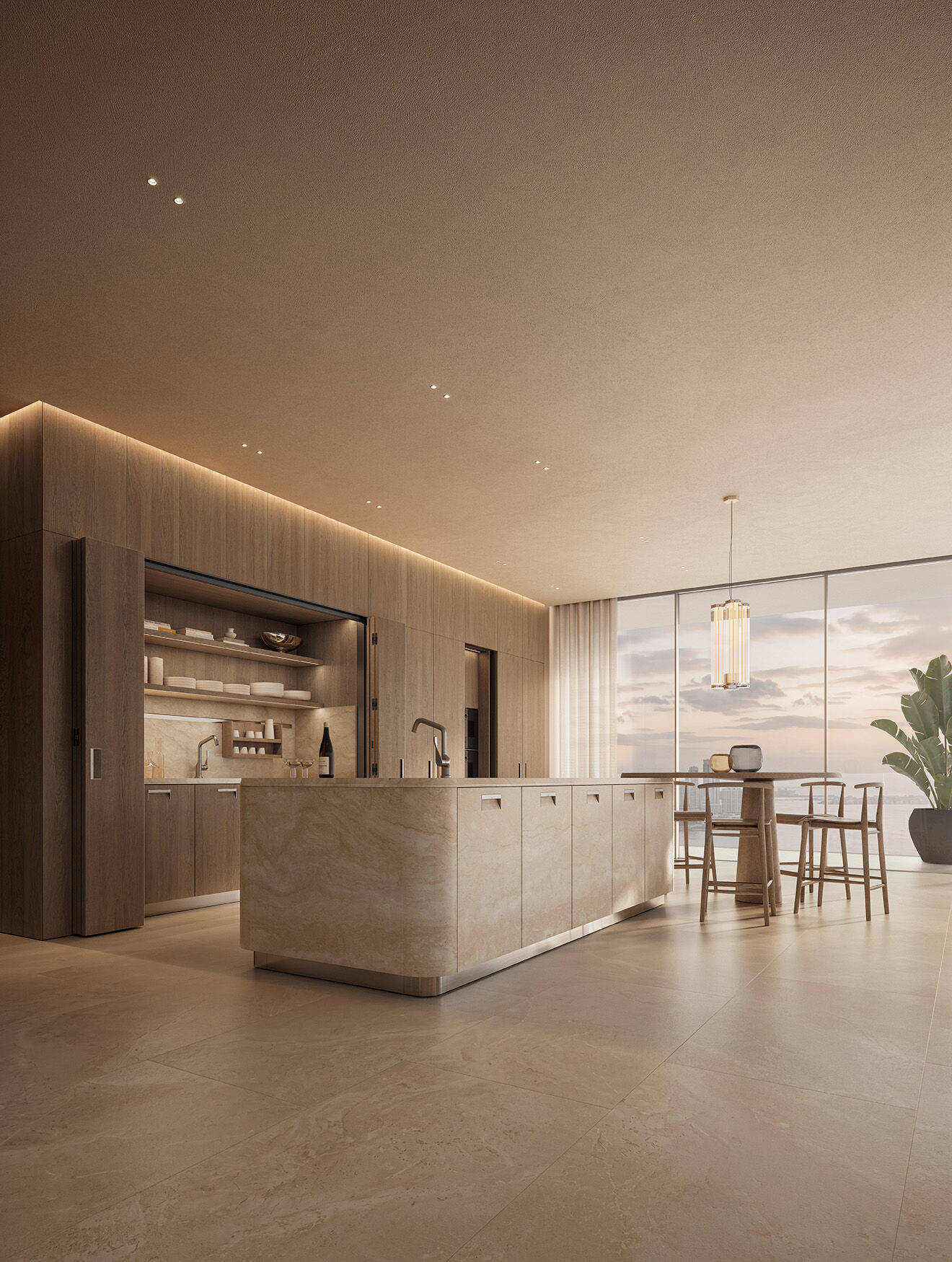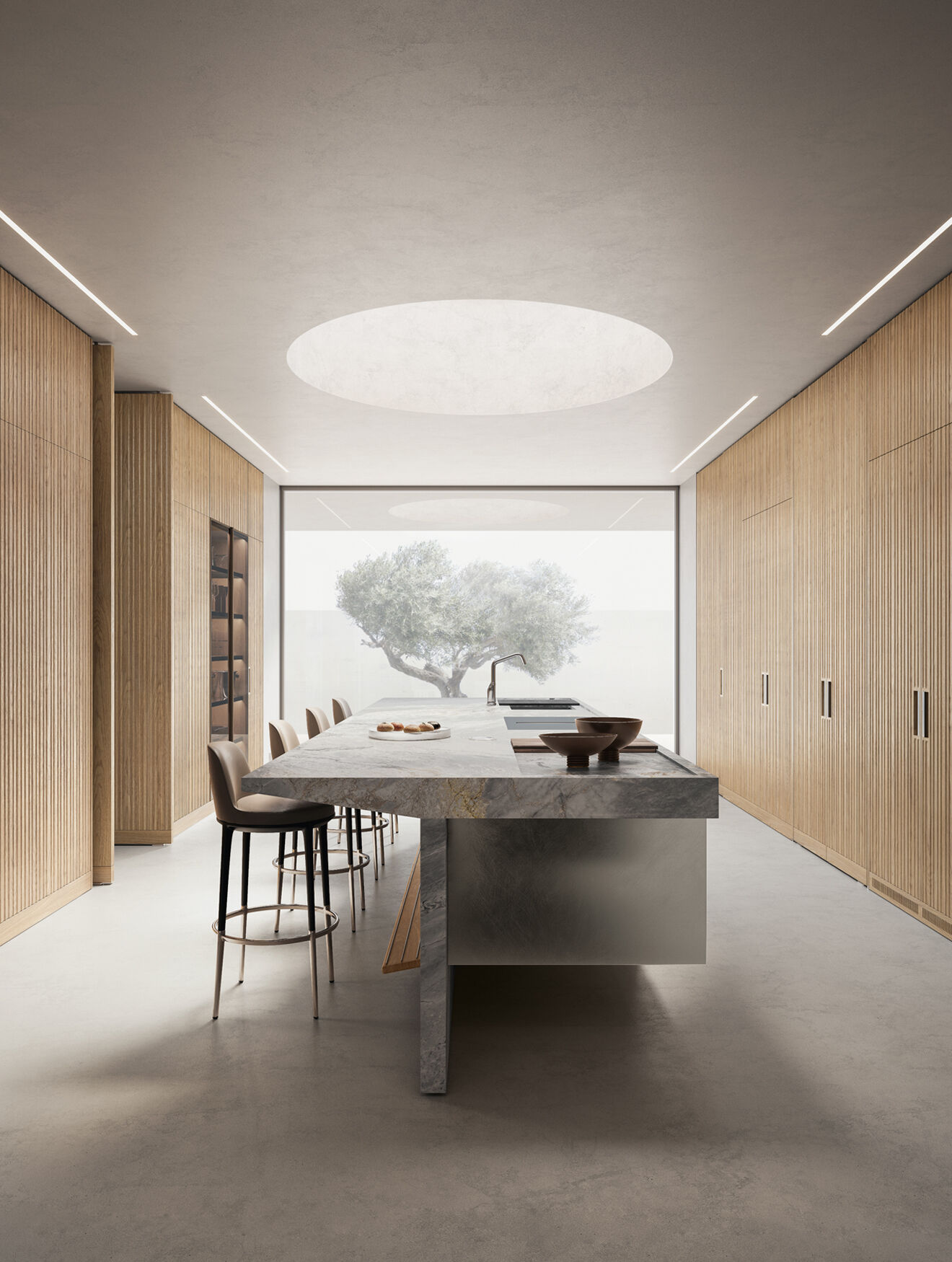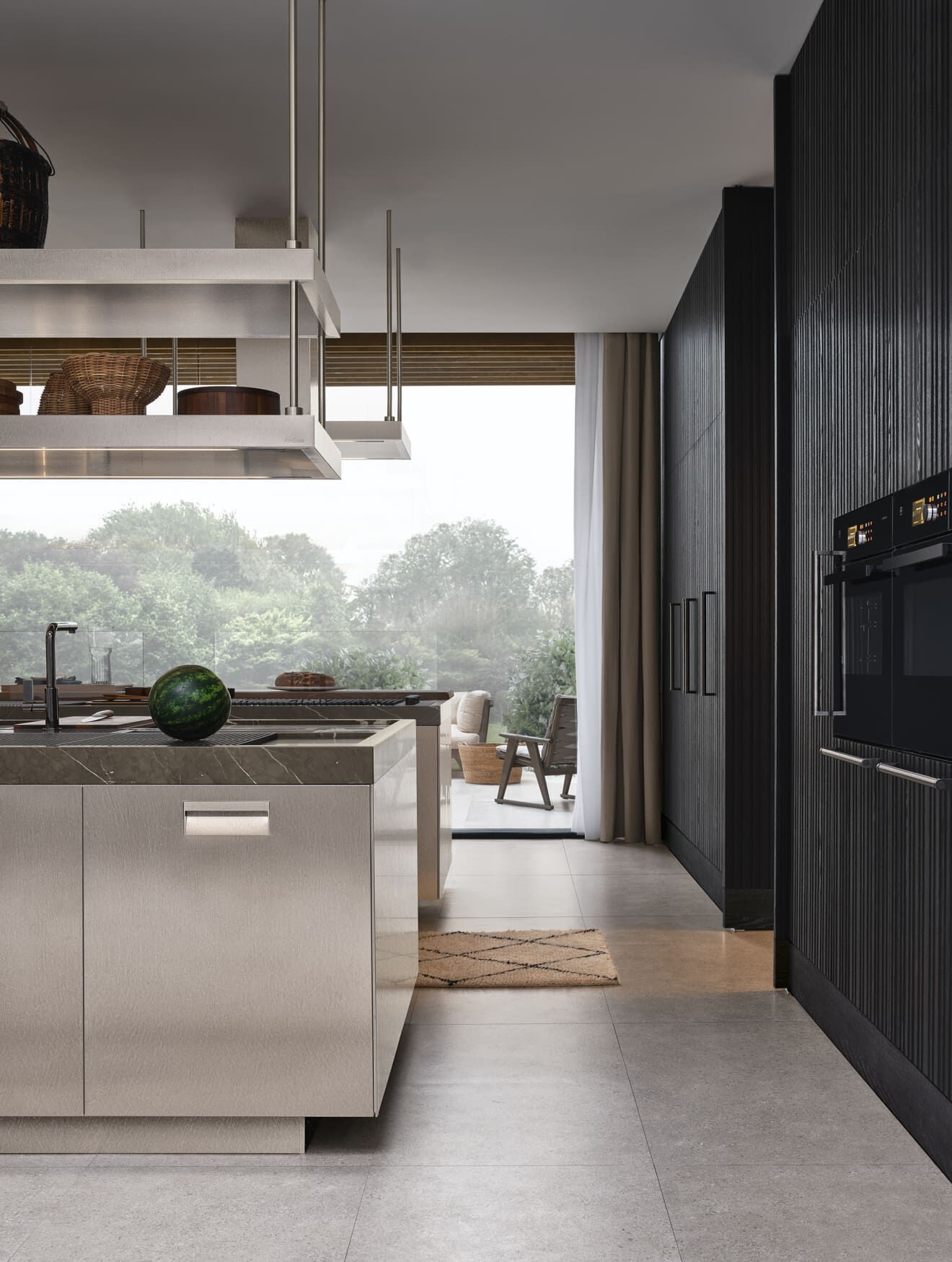

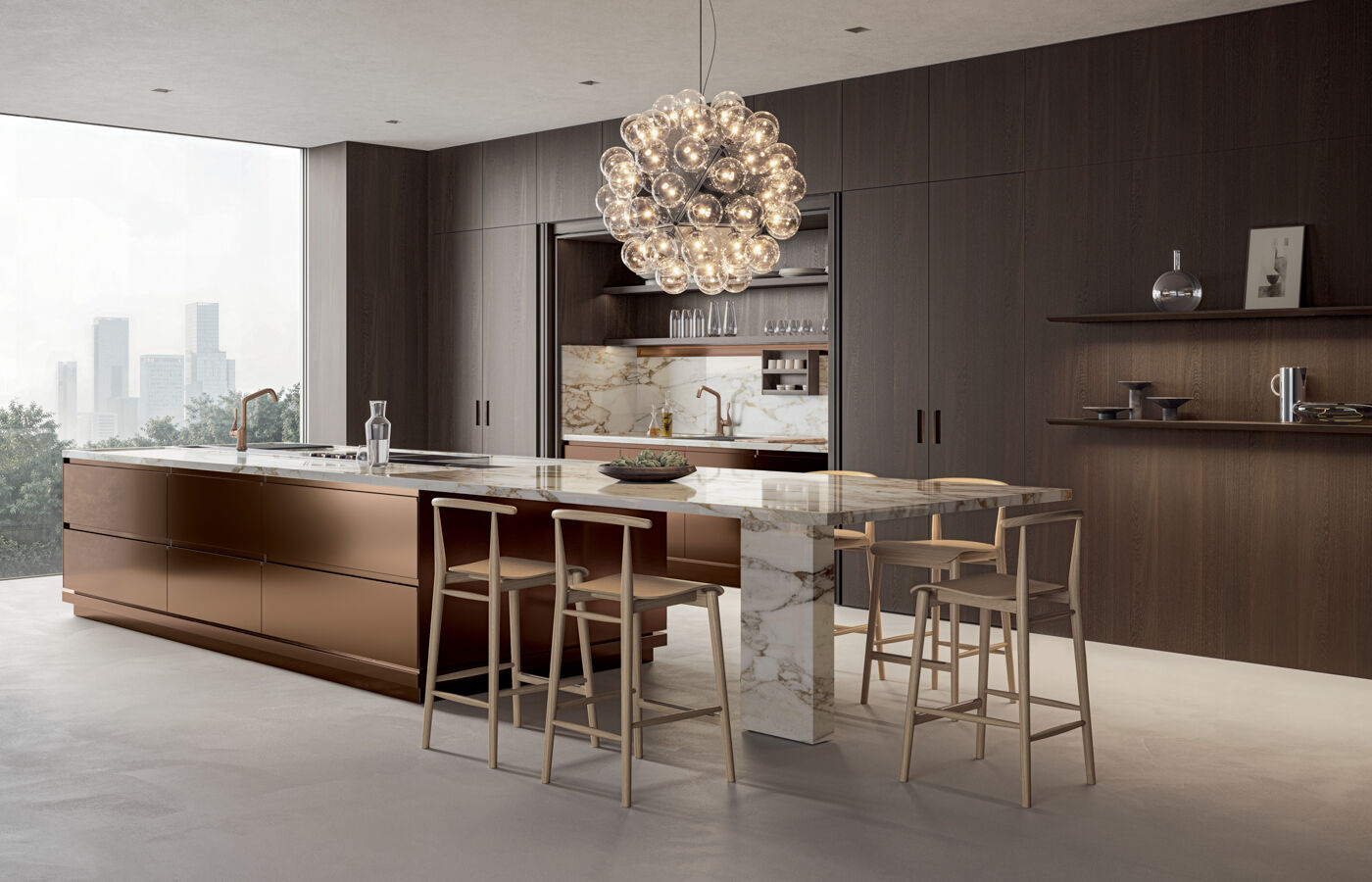

Suspendue entre ciel et ville, la cuisine devient un point d’observation privilégié : un intérieur ouvert sur le vert du parc et sur le rythme urbain qui se déploie au-delà. Convivium avec Lapis s’inscrit dans ce paysage comme une architecture domestique précise, construite autour de la matière, de la lumière et de la continuité spatiale. Les surfaces reflètent l’extérieur et en amplifient la présence, tandis que l’organisation intérieure dessine un espace fluide où préparation et convivialité coexistent sans hiérarchie. Un système ouvert et essentiel, où chaque élément contribue à un équilibre mesuré entre fonction et représentation.

CONVIVIUM AVEC LAPIS
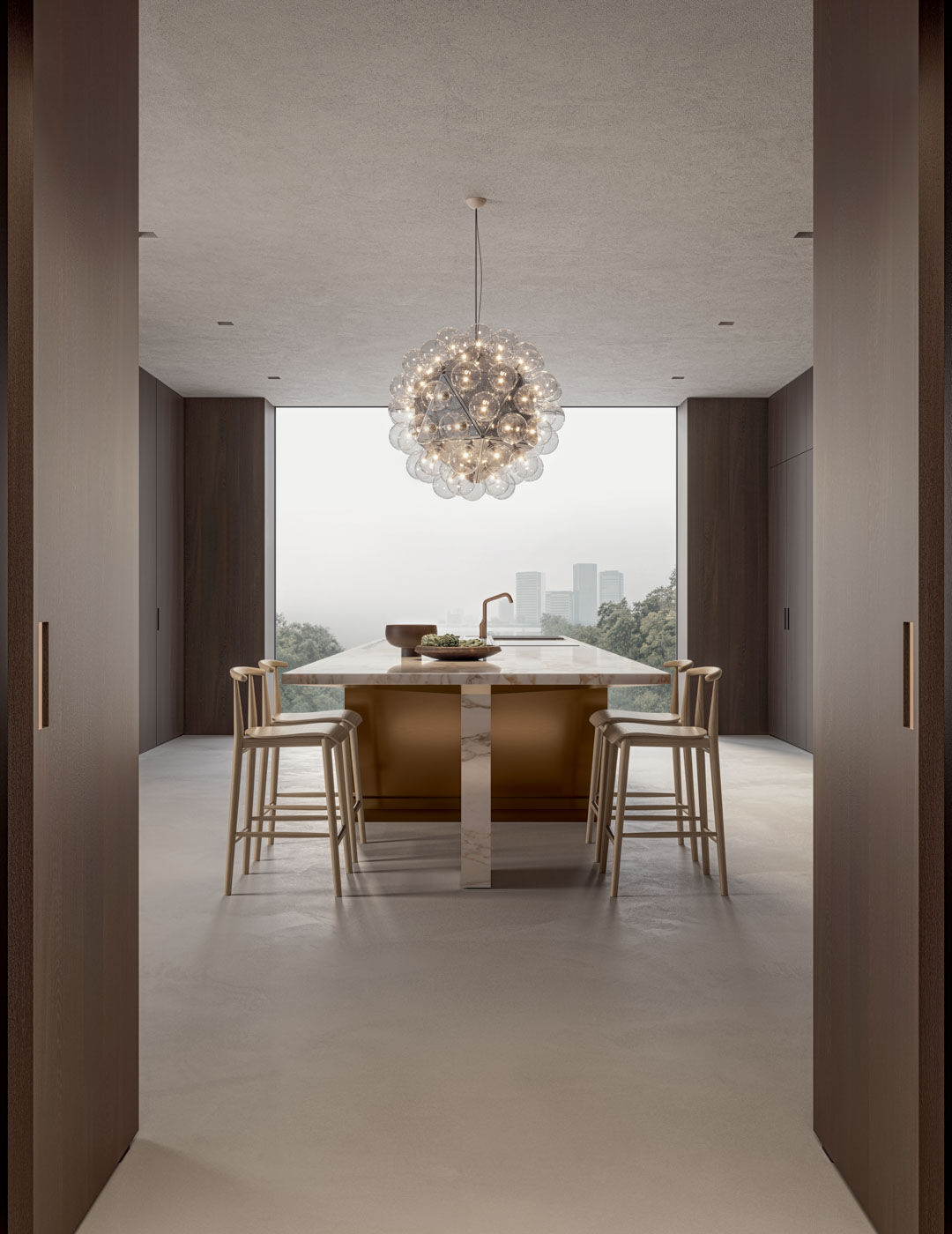
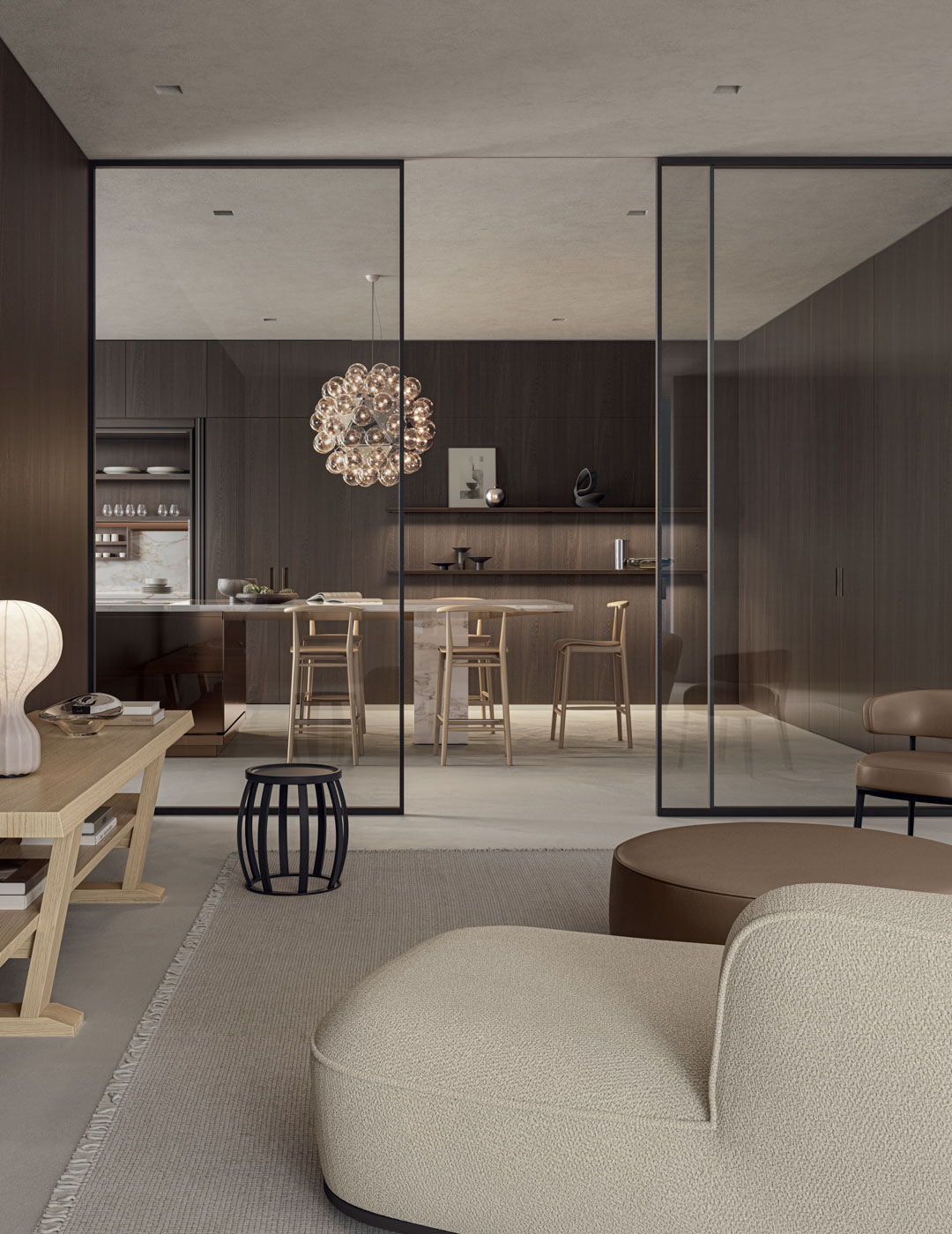
Le projet d’Antonio Citterio prolonge la réflexion sur la cuisine comme espace toujours plus ouvert et connecté à la salle à manger. Dans ce contexte naît la table Lapis, qui reprend et développe le langage de l’îlot Convivium, créant une continuité naturelle entre les fonctions. Pensée comme une table haute, elle introduit un usage plus libre et informel de l’espace, favorisant les moments d’échange et de partage. La cohérence des matériaux et des détails compose un ensemble harmonieux, où chaque élément dialogue avec les autres avec discrétion et précision.
« Convivium avec Lapis naît comme un organisme domestique unique, où îlot et table sont les variations d’un même langage architectural. »

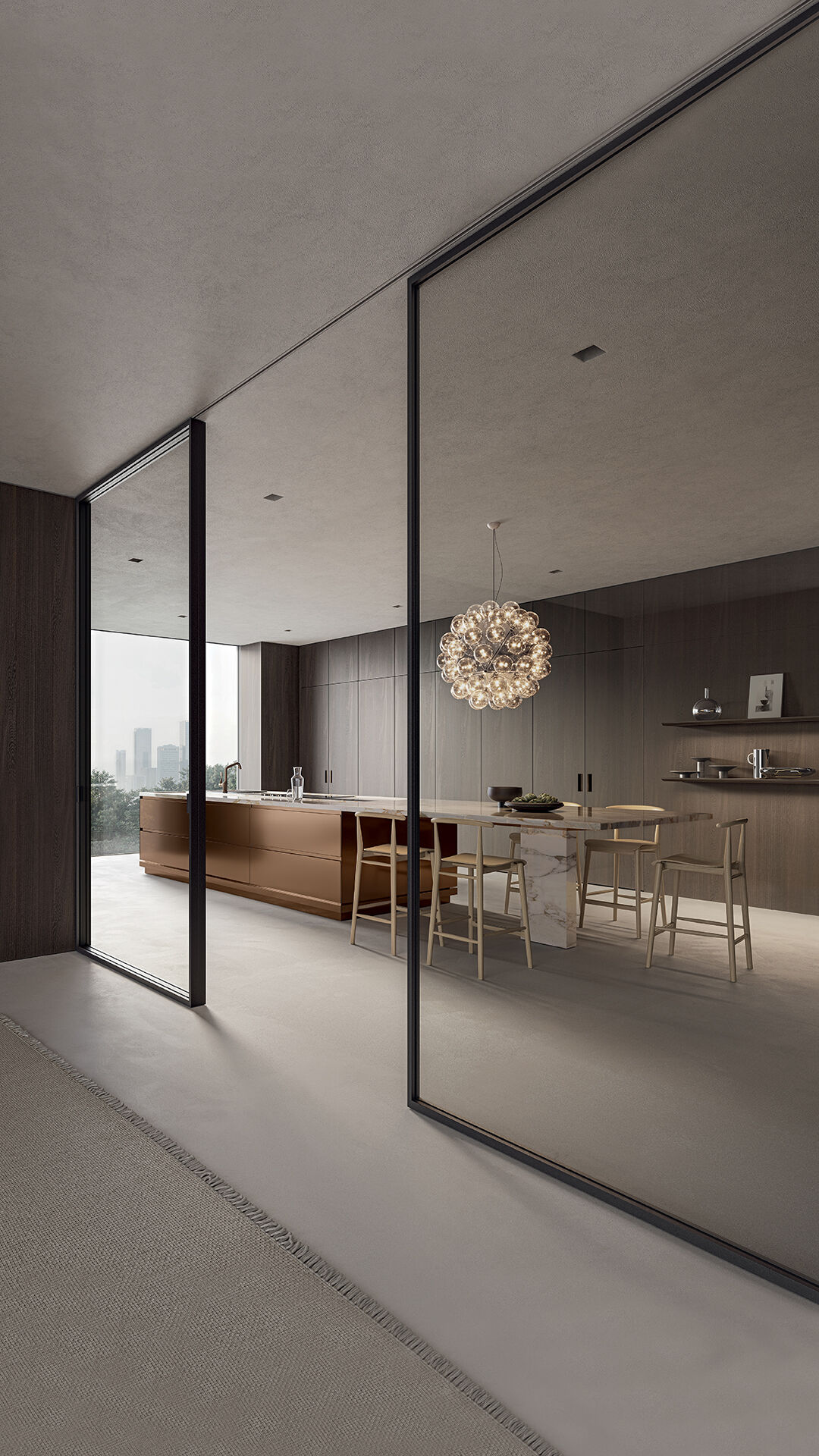
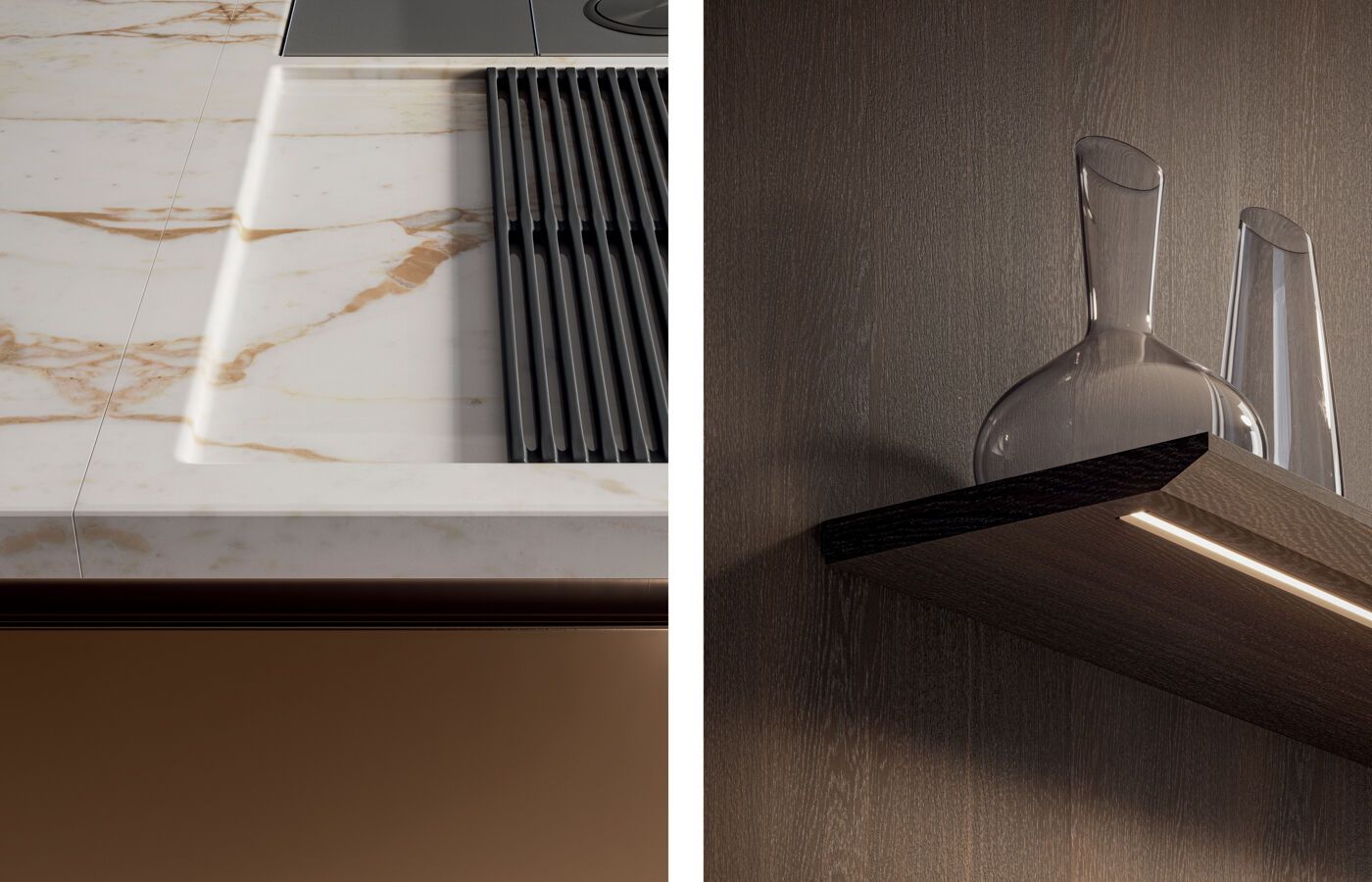
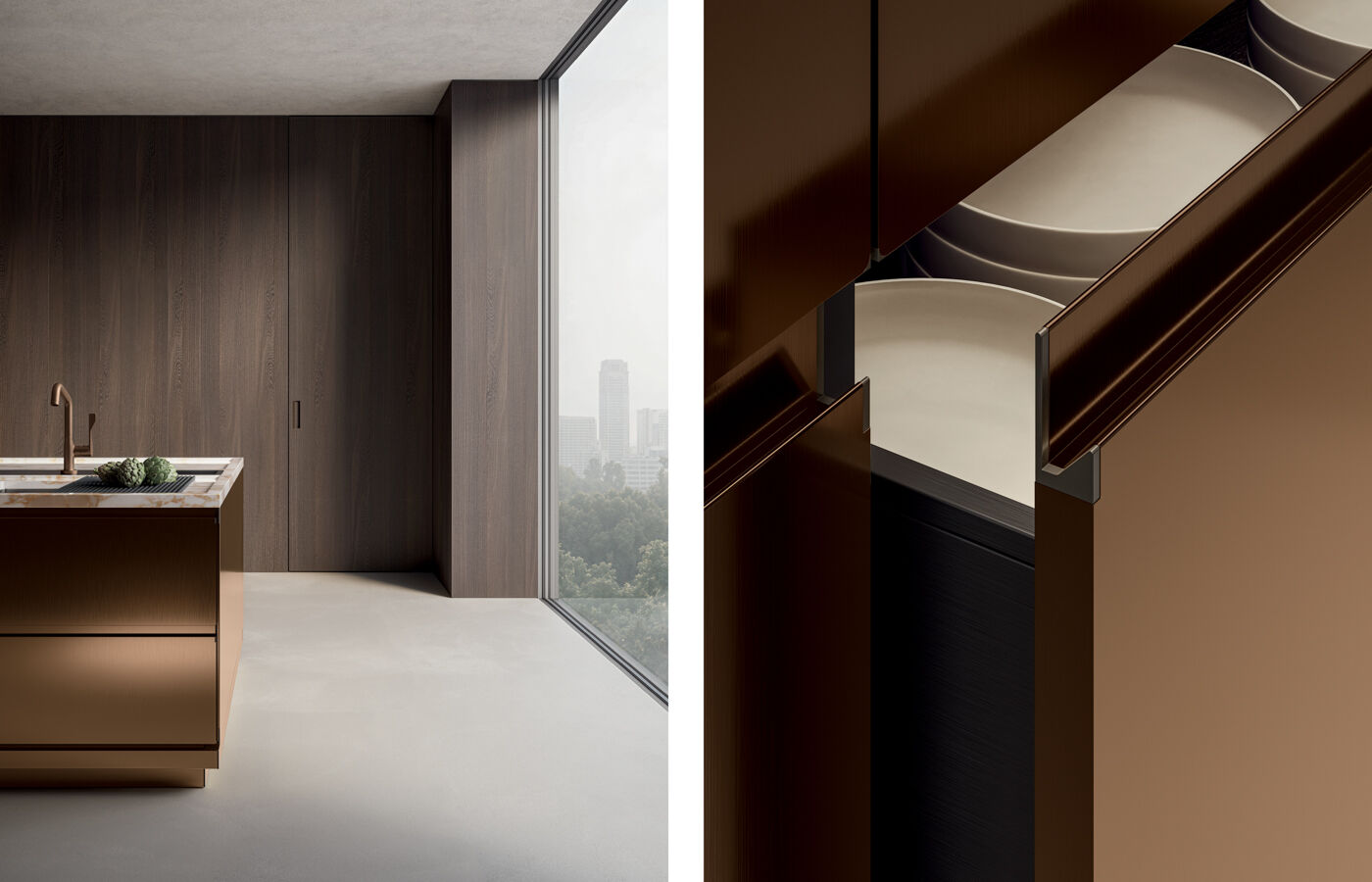
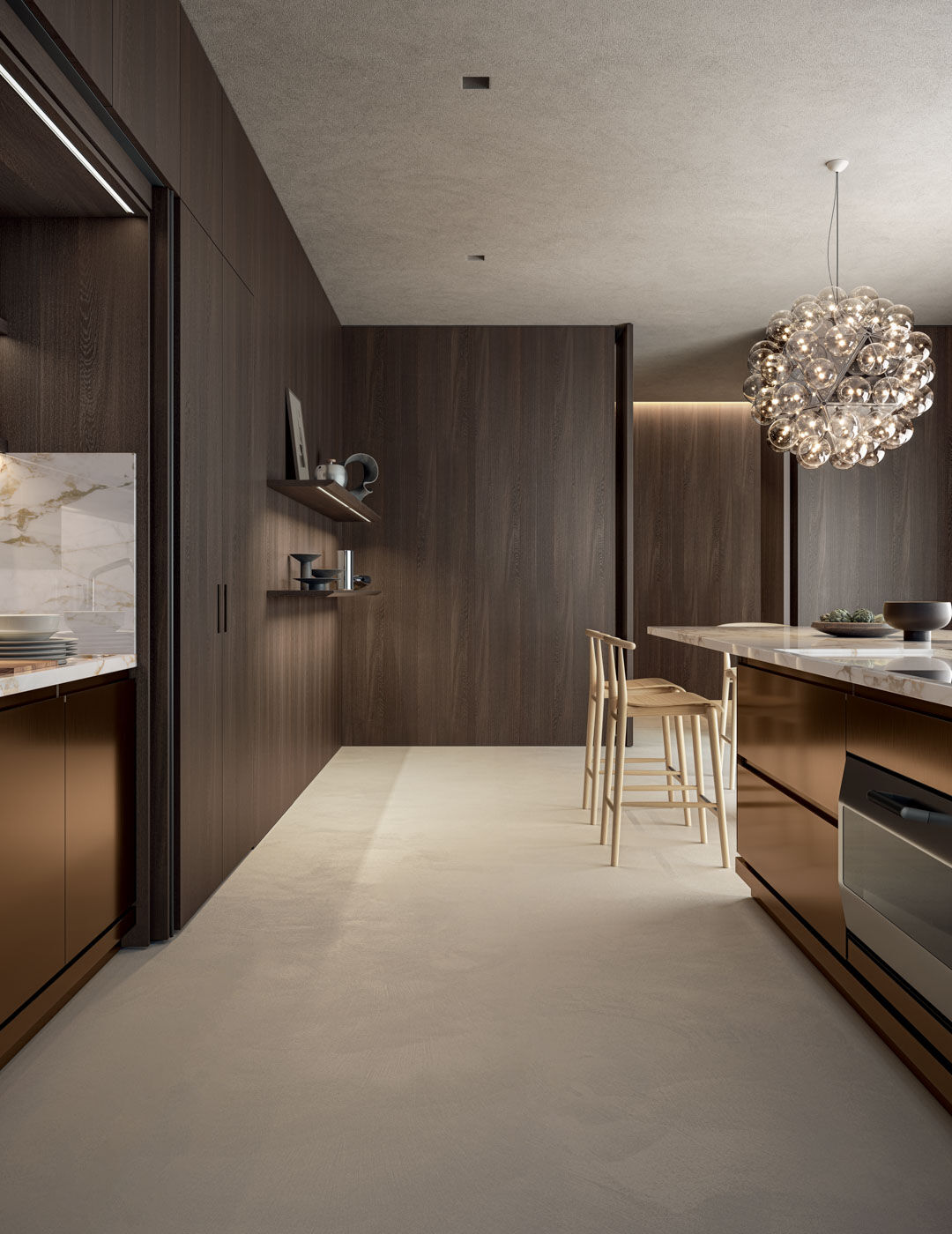
L’agencement s’articule autour d’un îlot central et d’un mur équipé avec système folding, permettant de dissimuler ou révéler les fonctions. Les matériaux définissent une palette sophistiquée : acier PVD Plus bronze pour les façades et plinthes, marbre Calacatta Gold poli pour les plans et crédences, chêne fumé NTF pour les colonnes, boiseries et accessoires. Des détails tels que la barre en aluminium anodisé finition bronze et les poignées intégrées contribuent à un langage élégant et cohérent.
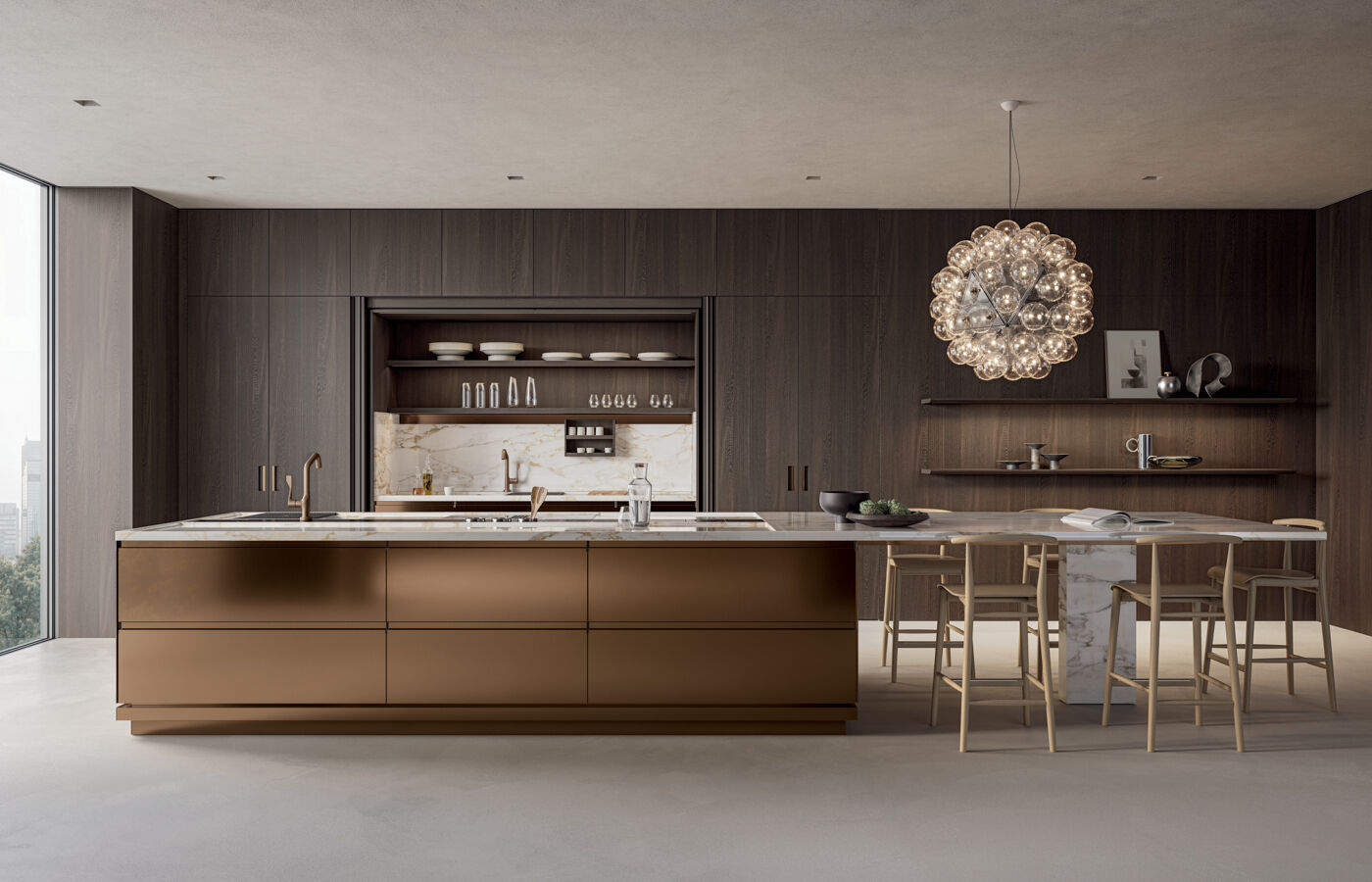

L’îlot constitue le cœur du projet, caractérisé par un plan en marbre Calacatta Gold issu d’un seul bloc. Le veinage du marbre se développe de manière symétrique au point de jonction avec la table, dessinant une continuité parfaitement équilibrée. L’évier et le robinet en acier inox PVD Plus bronze s’y intègrent avec naturel. Les tabourets Jens en chêne clair NTF apportent une note de légèreté, complétant l’équilibre des matières. Autour, des étagères effilées avec éclairage intégré glissent sur la boiserie en chêne fumé NTF. Le mur équipé avec portes folding se compacte et disparaît dans les colonnes.

La qualité du projet réside dans sa capacité à dissoudre les frontières entre fonction, relation et paysage.



« Le projet repose sur la continuité entre îlot et table : un langage formel unique qui rend l’espace fluide, naturel et habitable. »
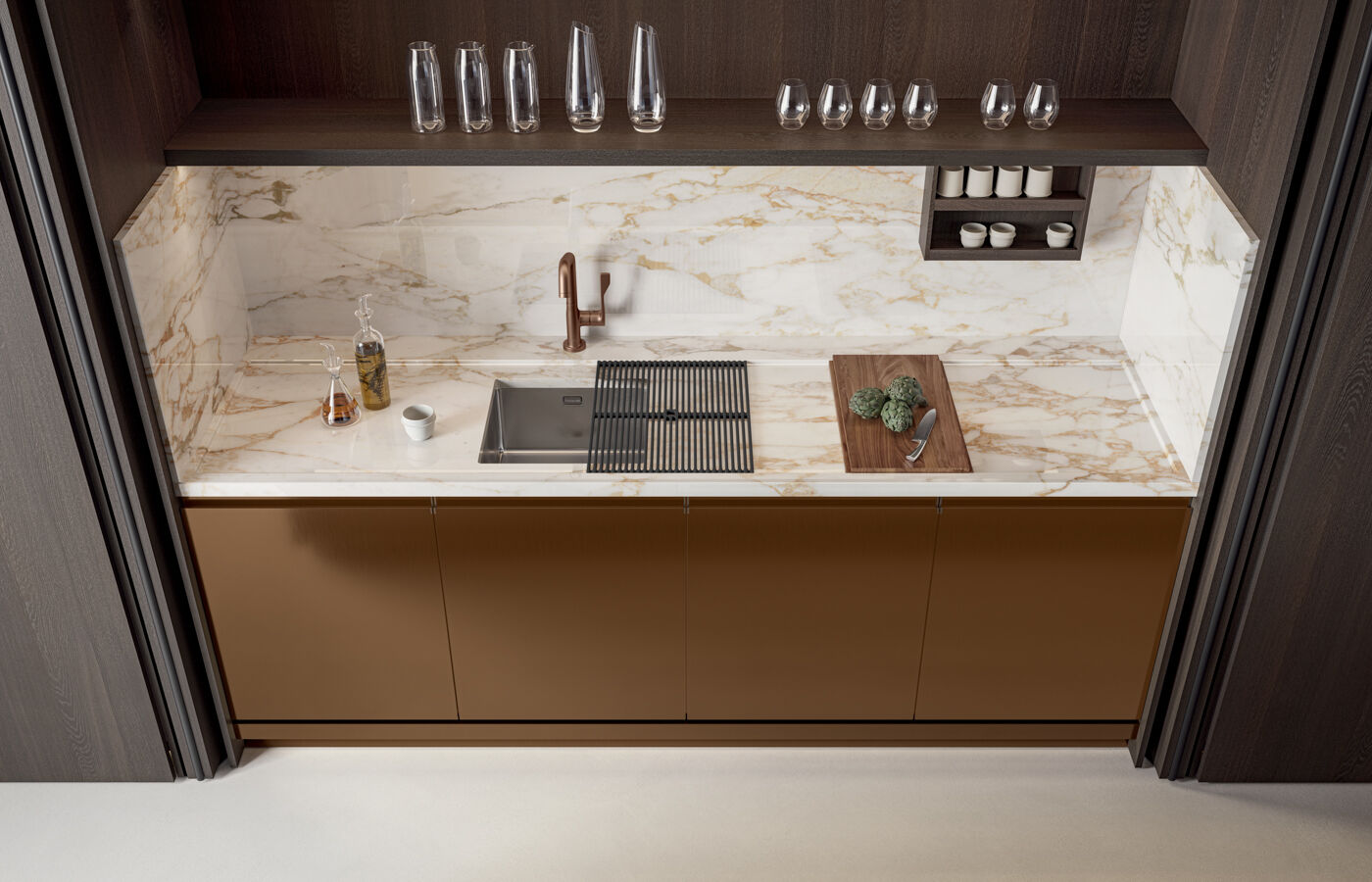

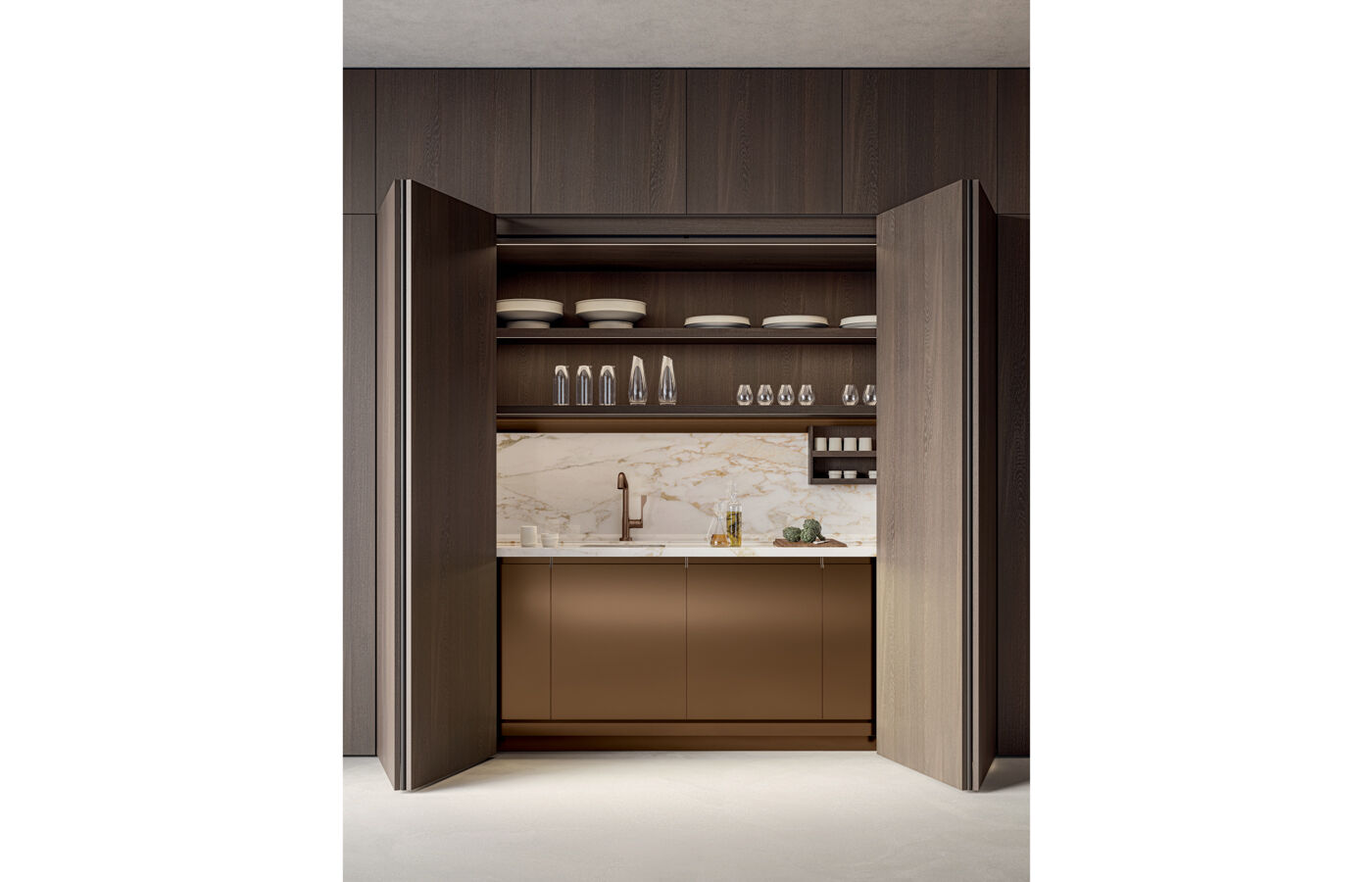

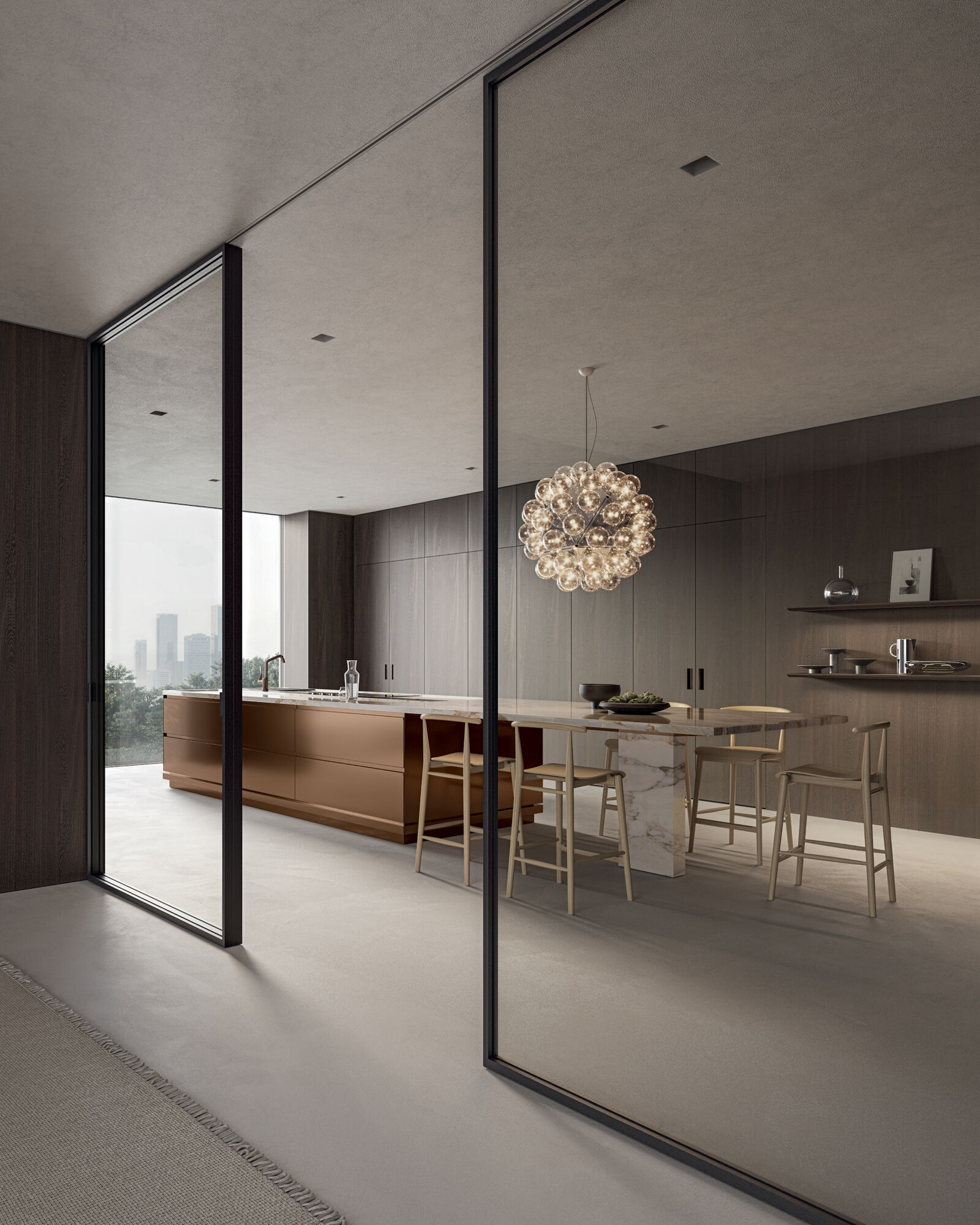
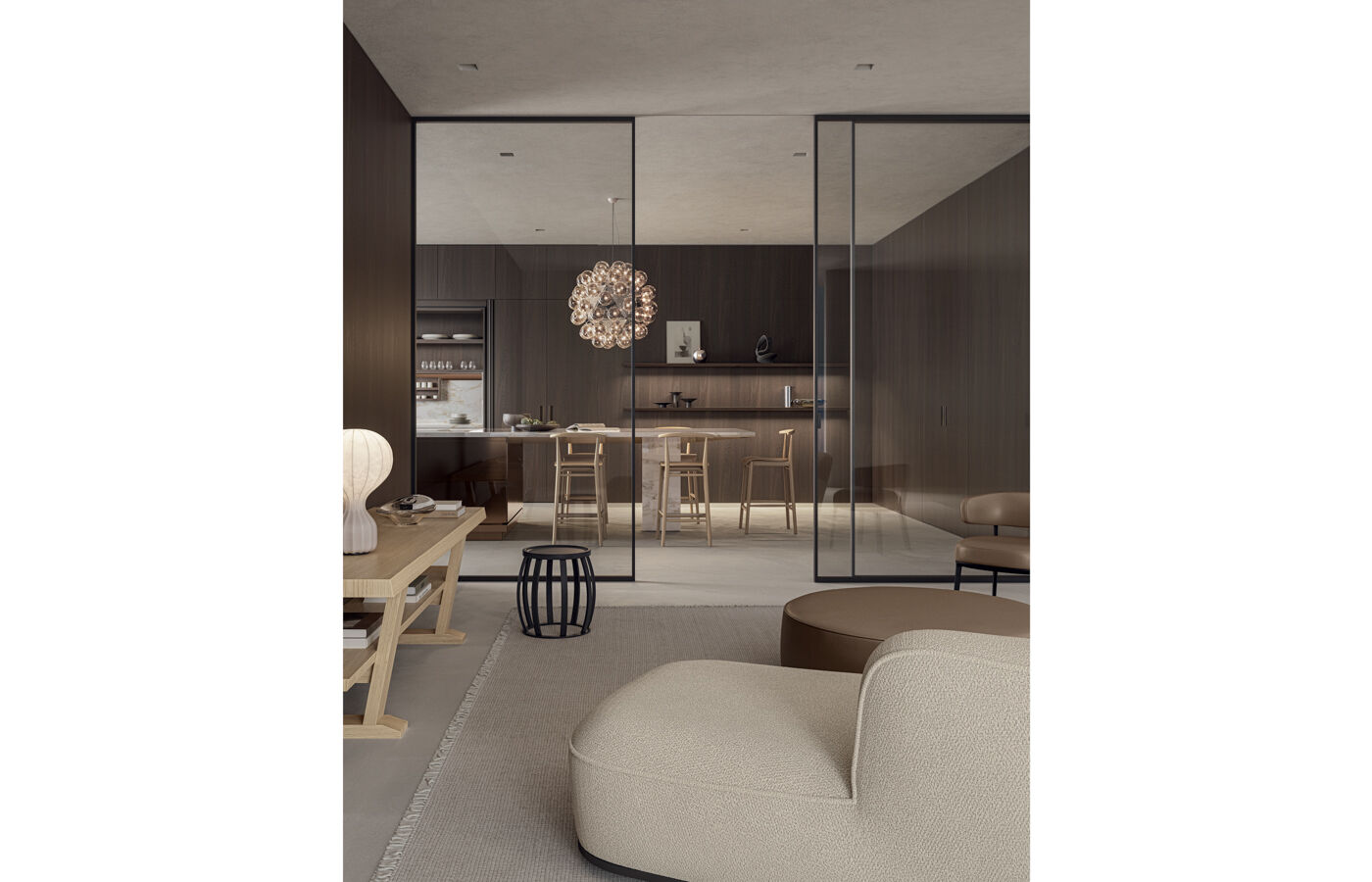
Délimitant l’espace, de grandes portes vitrées filtrent avec légèreté le passage vers le séjour, laissant le regard circuler tout en préservant une continuité visuelle et stylistique. La cuisine reste ainsi en dialogue constant avec son environnement, tout en conservant son identité fonctionnelle. Il en résulte un ensemble cohérent et contemporain, où matériaux, géométries et détails s’accordent naturellement pour créer un espace sophistiqué et accueillant, pensé pour être vécu et partagé au quotidien.


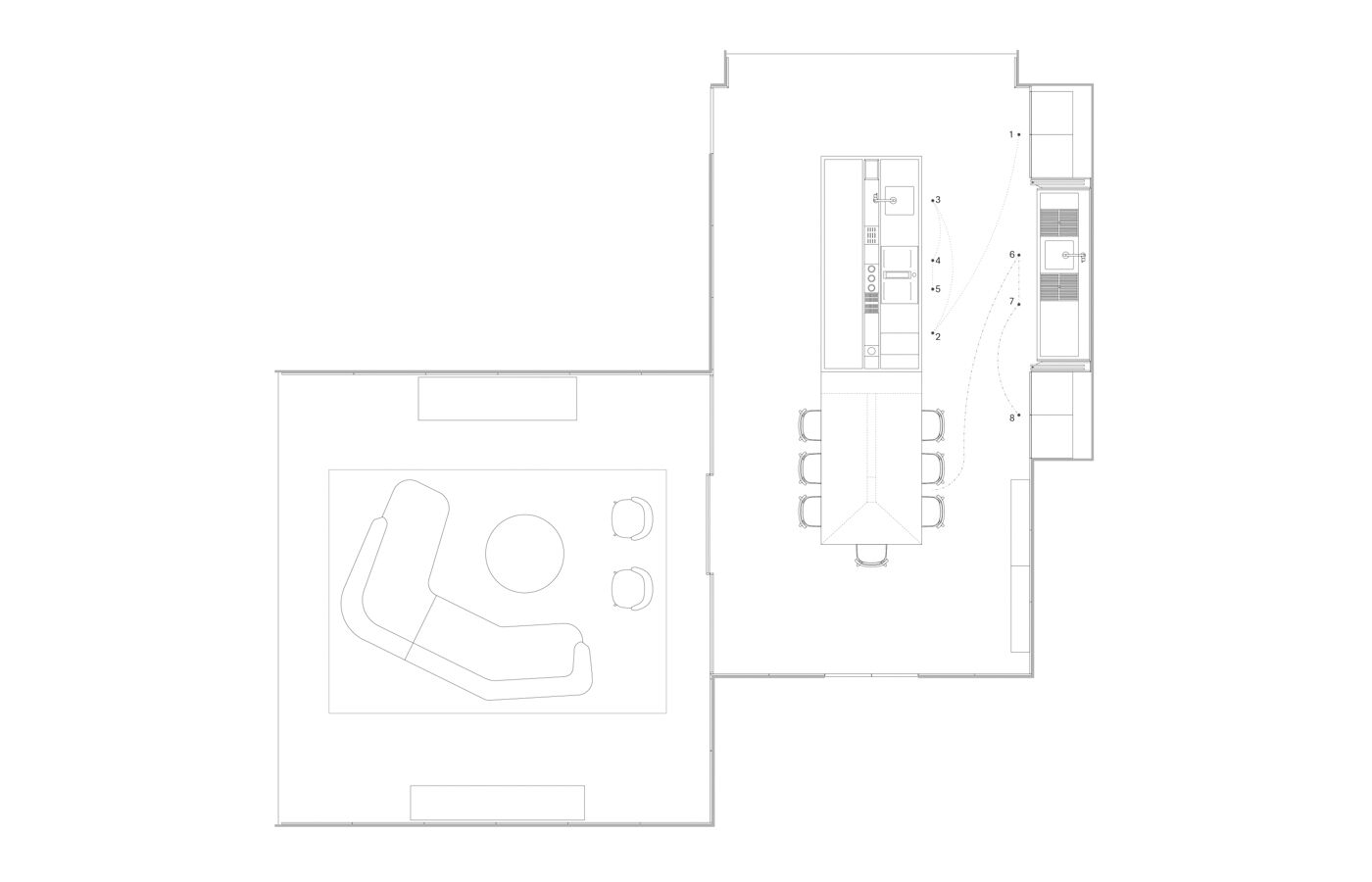

–.–.–. Cycle de lavage
……… Cycle de préparation des repas