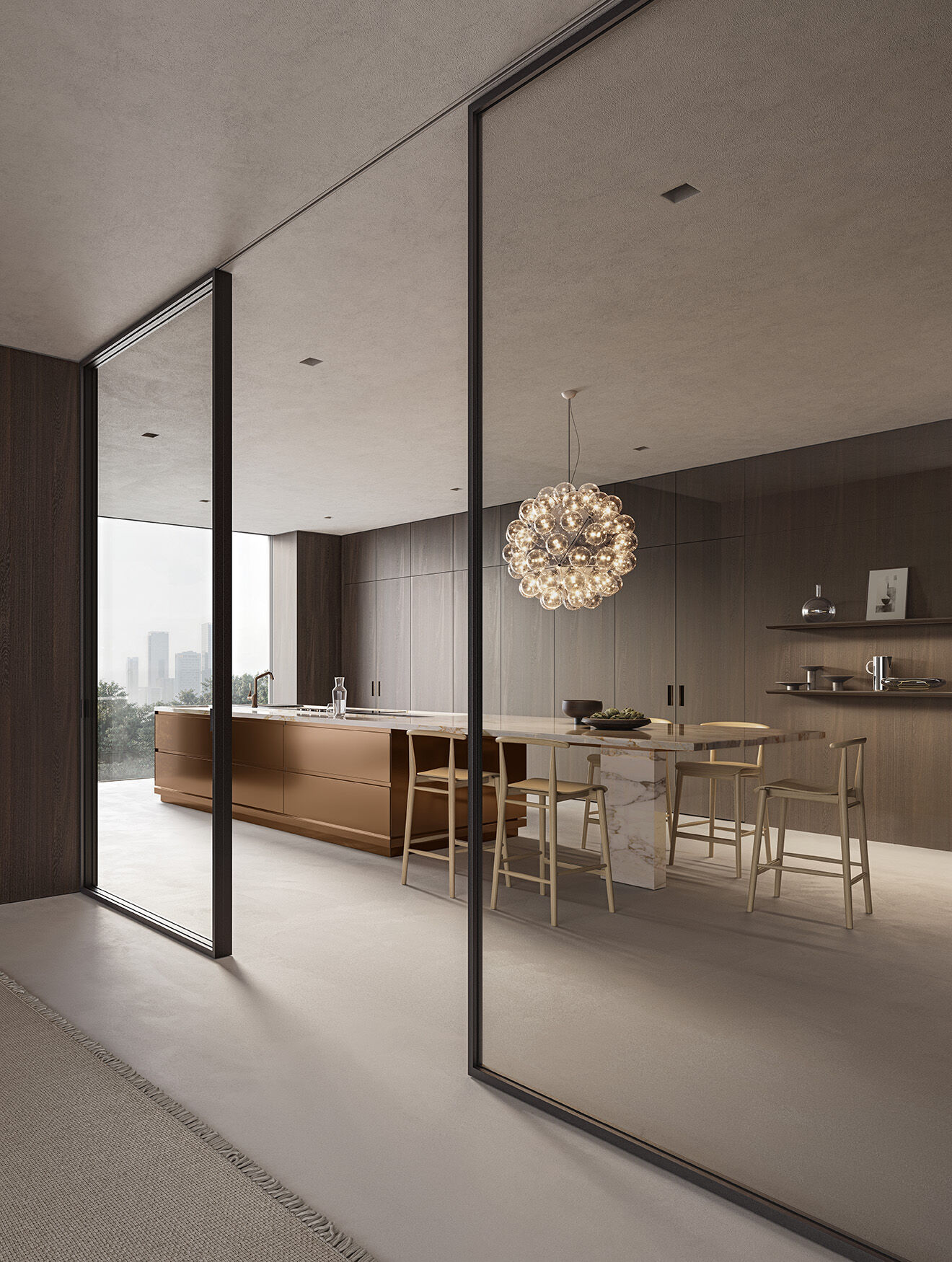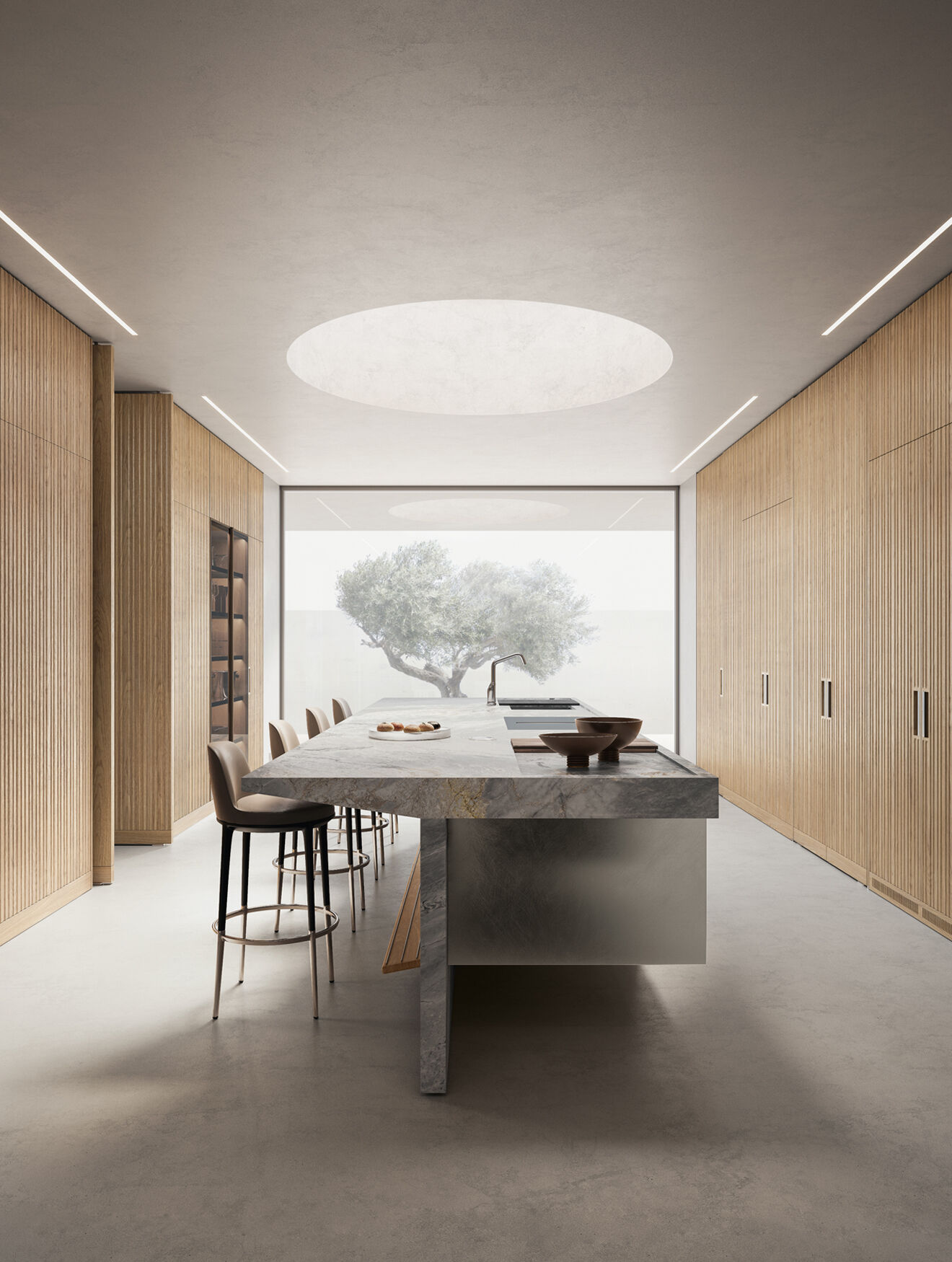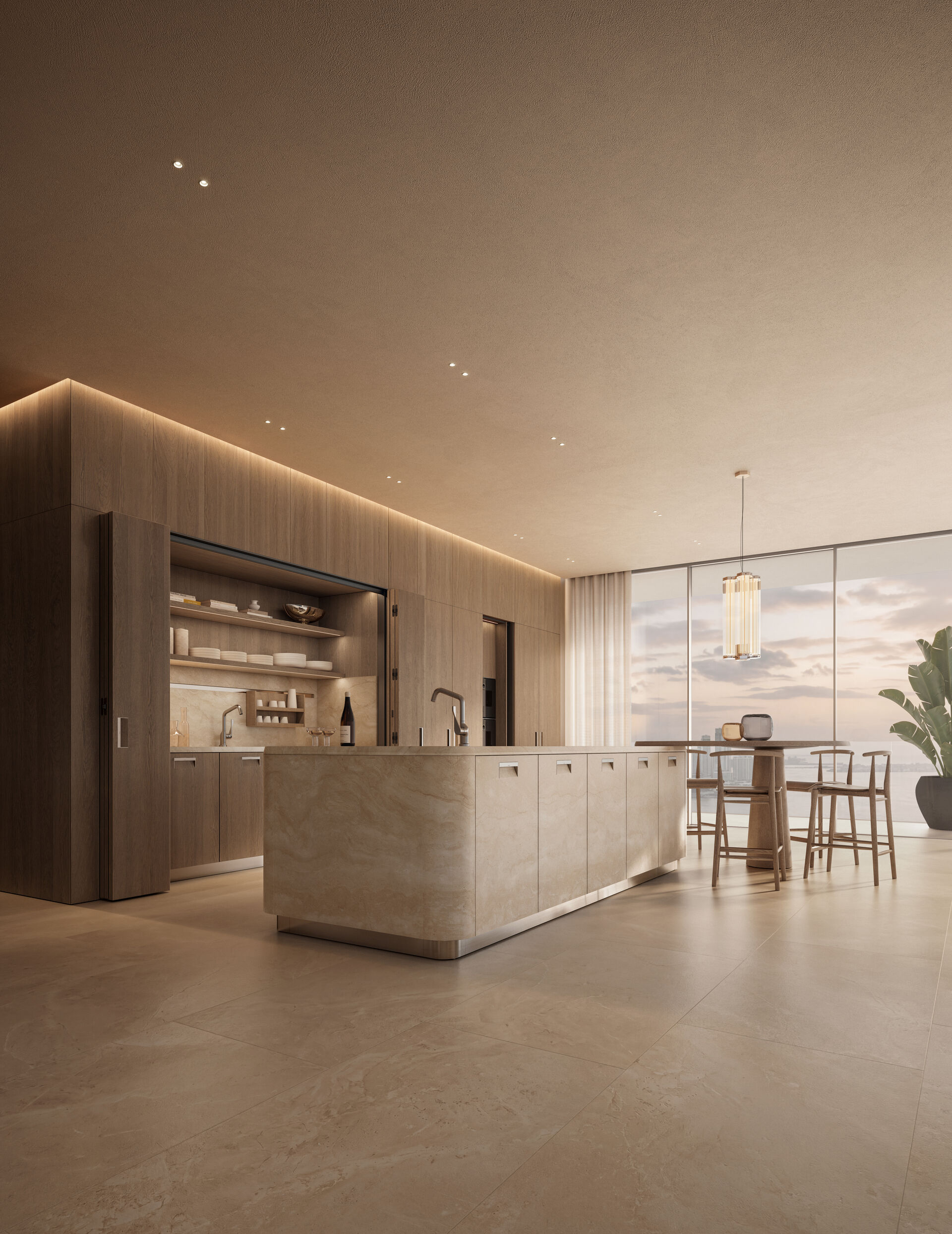

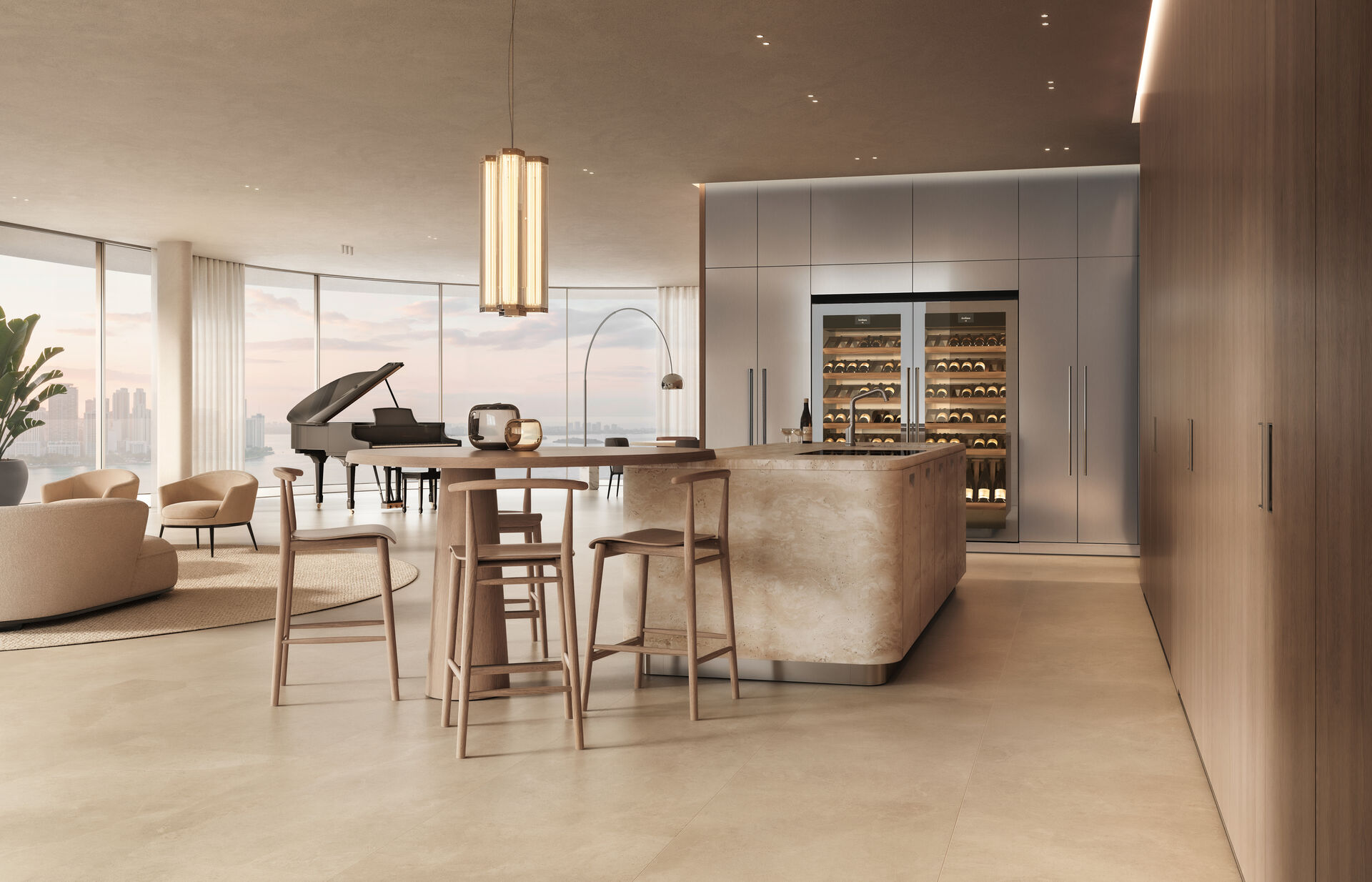

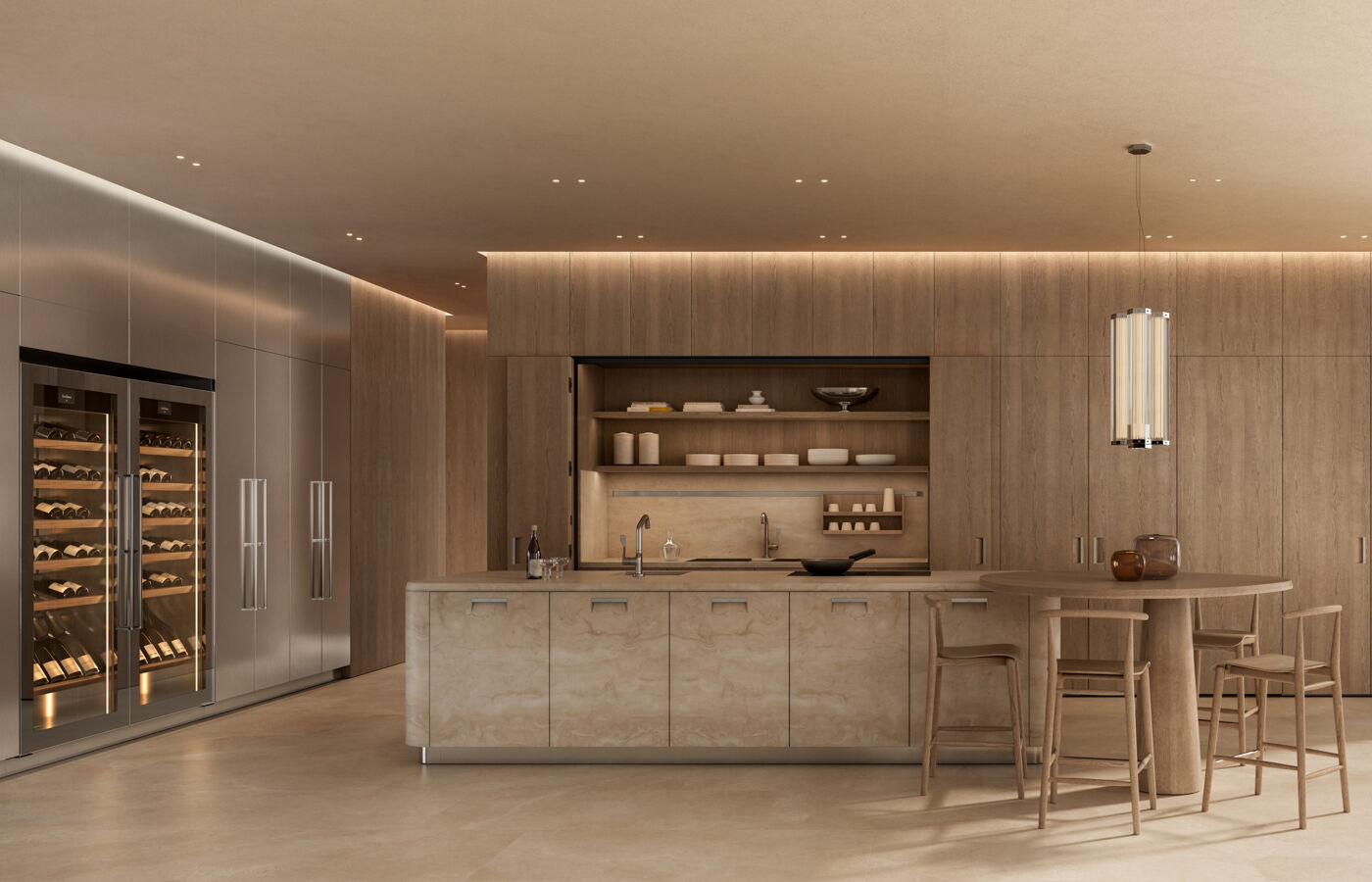
In a penthouse atop a residential tower, suffused with natural light and a palette of natural, even tones, the atmosphere feels soft and enveloping. Sunshine filters through a wide window overlooking the city, illuminating the sense of space and the continuity of surfaces. At the centre, the Kora island emerges as a sculptural presence; a generous, uninterrupted volume in travertine marble, paired with the Folia table set alongside. Behind, a wall of fitted cabinetry in tobacco oak discreetly organises the functions of the kitchen. Stone, wood and stainless steel establish a clear and cohesive material language, poised between design precision and a quiet sense of domestic warmth.
KORA
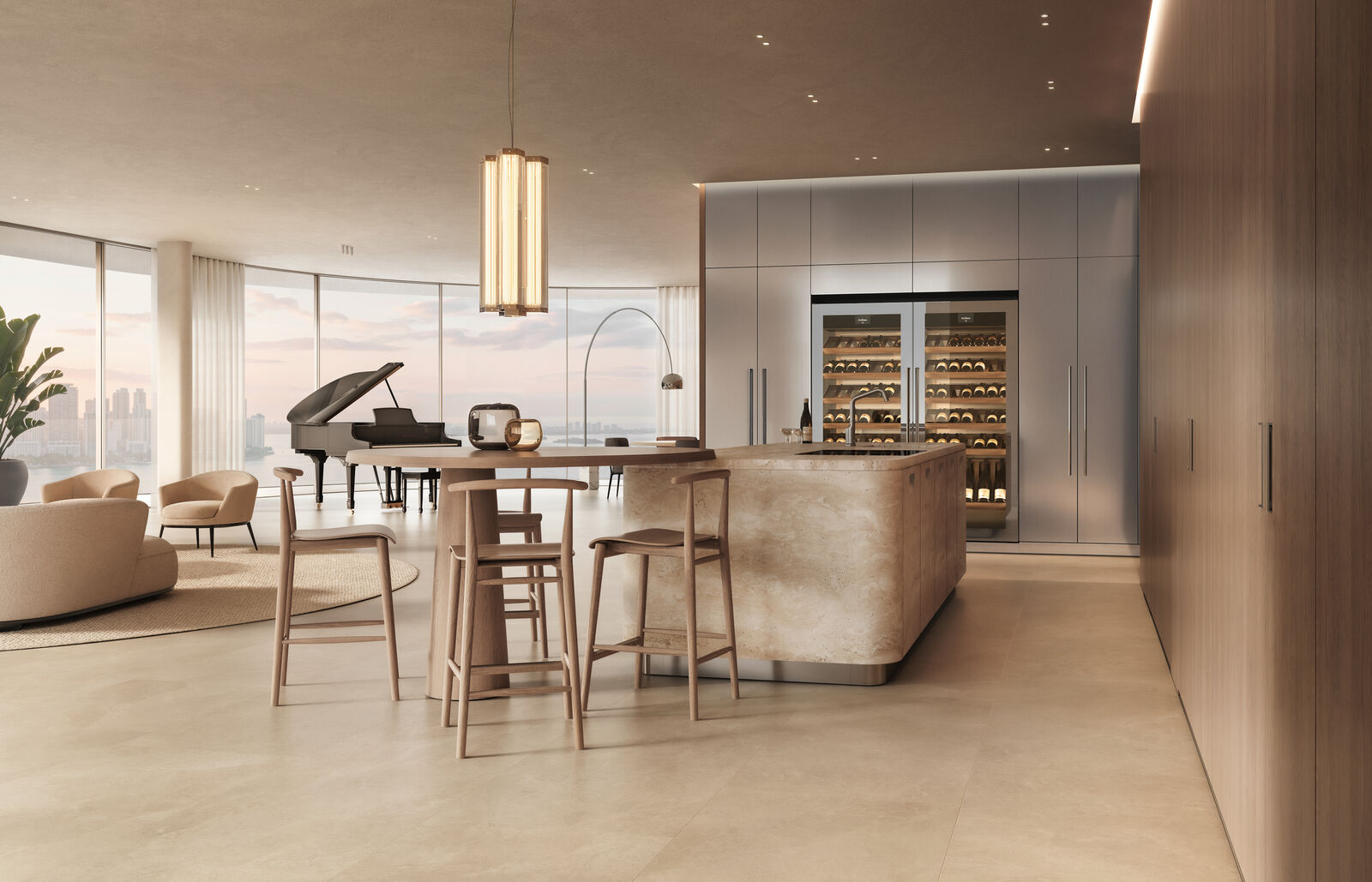
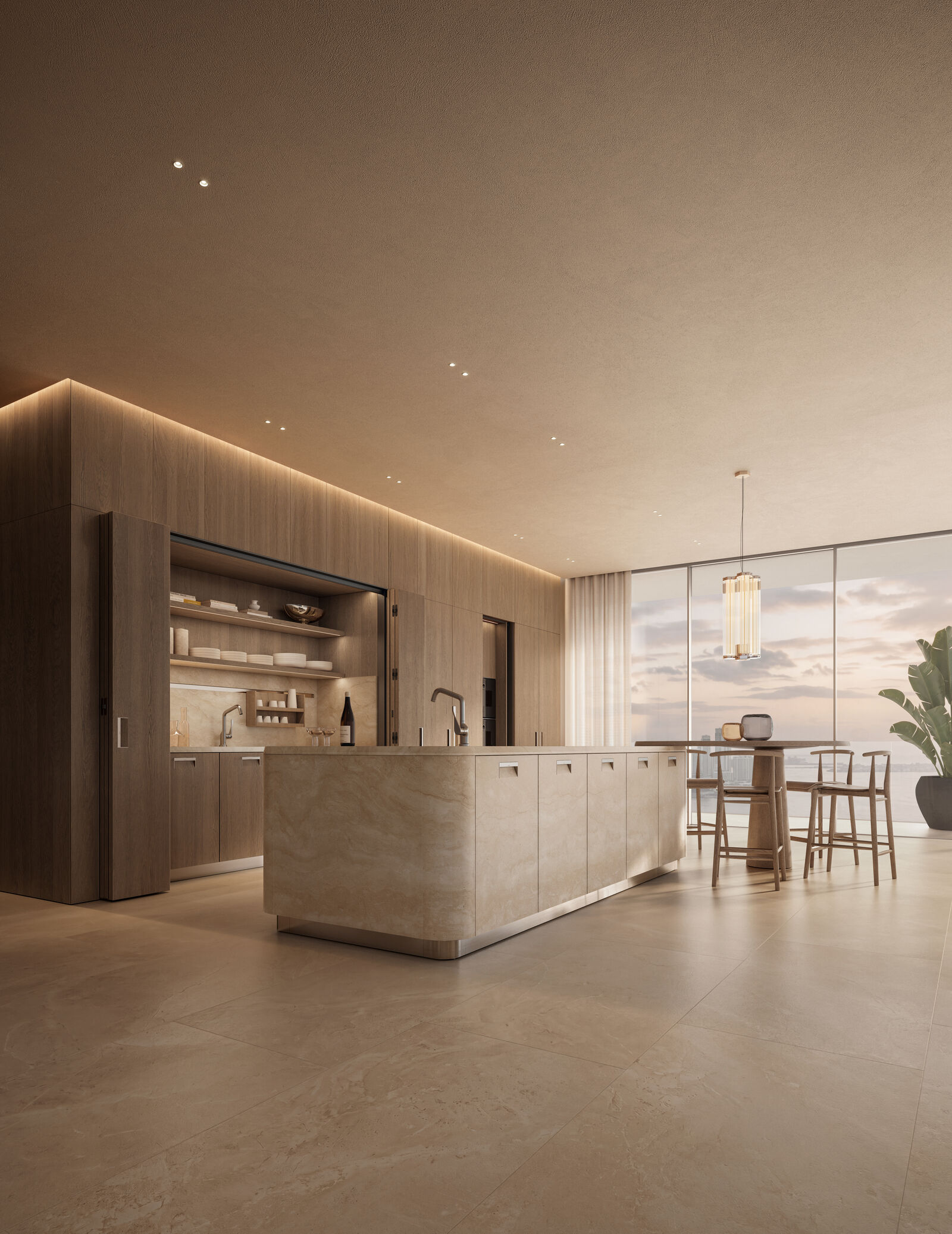
Designed by Antonio Citterio for Arclinea, Kora introduces a new design language shaped by the curve. The island moves beyond rigid orthogonality, opening into rounded corners and continuous, welcoming forms. Surfaces flow with ease, offering more fluid and intuitive ways of inhabiting the space. The doors and handles define a distinctive signature, where technical precision and aesthetic clarity converge, contributing to a cohesive reading of the whole.
“Through Kora, we advance the evolution of the island: a curved form that introduces fluidity and freedom into space.”
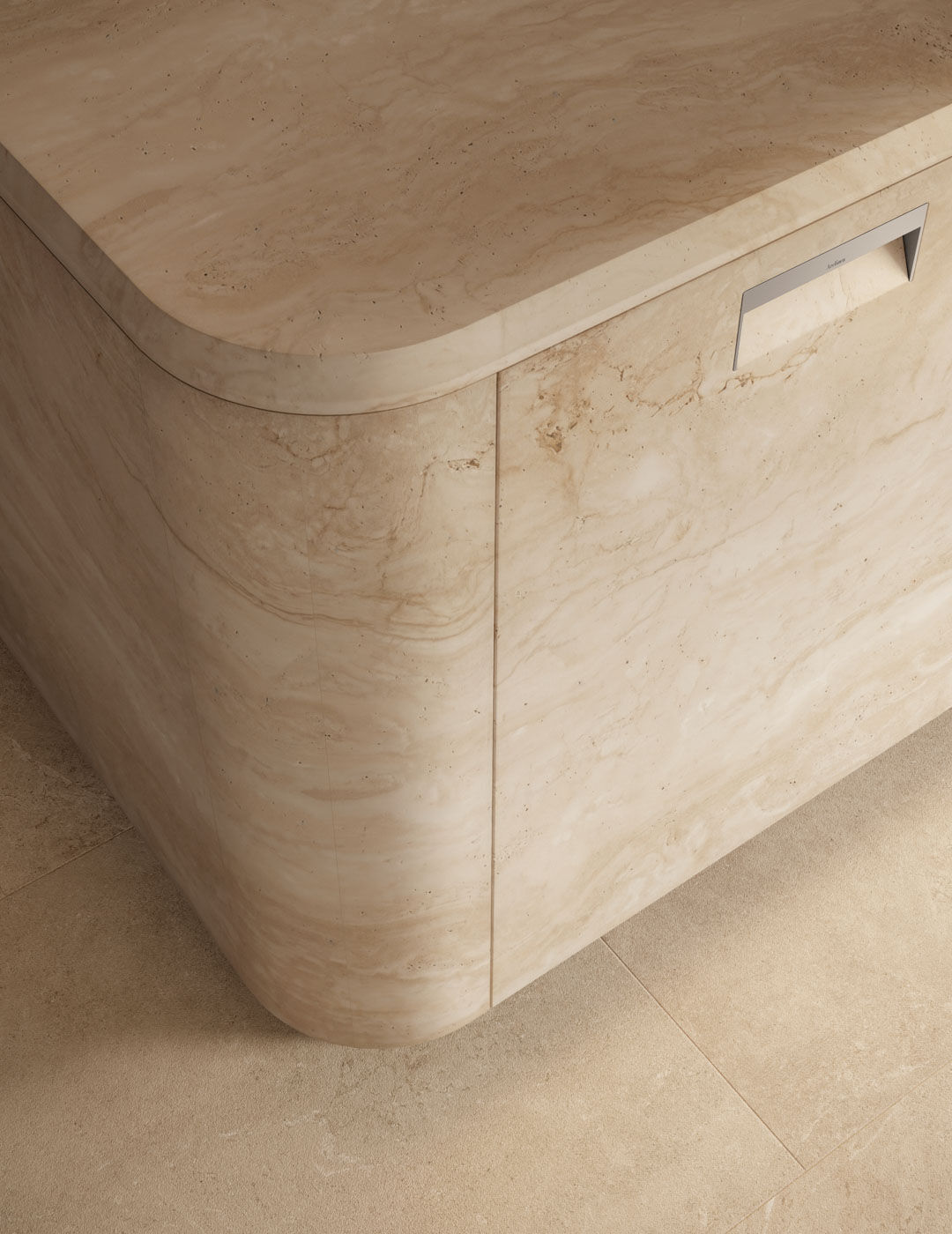

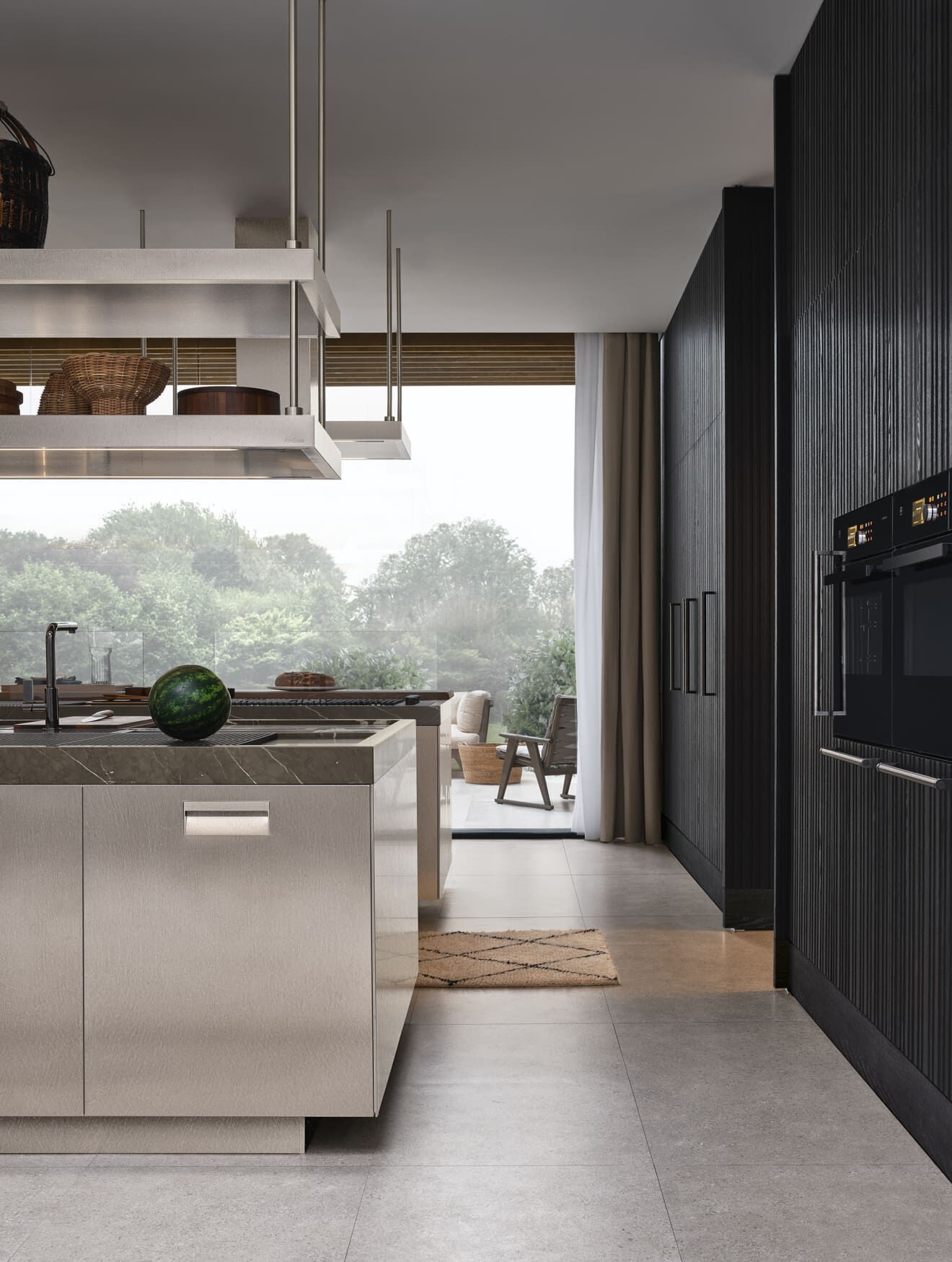
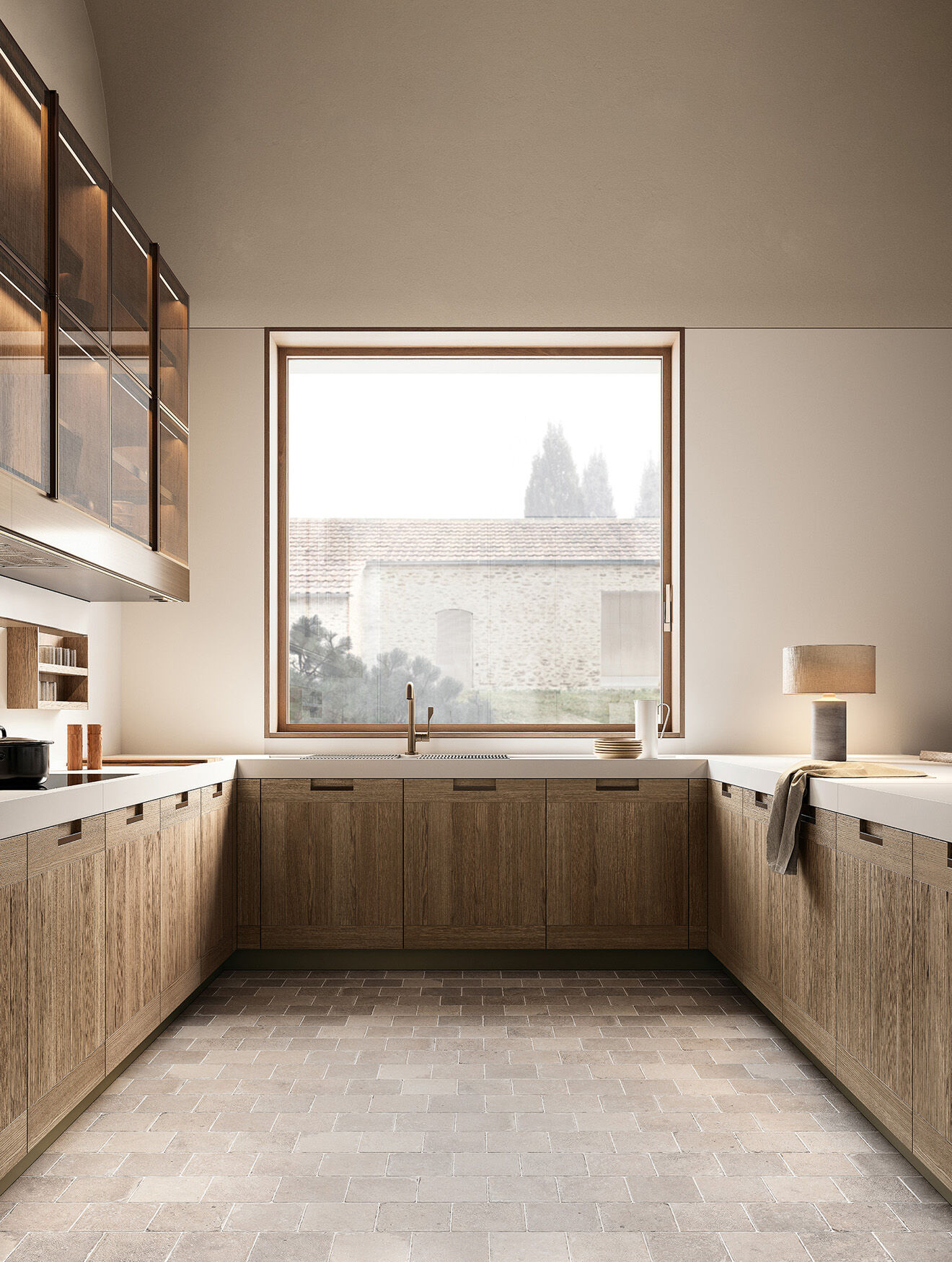
The project draws out the depth of each material through carefully considered pairings and finely worked surfaces. Travertine marble, used across the top, sides and doors, conveys a sense of solidity and visual continuity, while the tobacco oak of the wall introduces warmth. The Italia marble door incorporates its namesake handle, carved directly into the stone and precisely inset, an expression of artisanal skill and technical mastery. Stainless steel completes the composition, lending a subtle professional character.
Around the island, a system of complementary elements broadens its use. The Folia table connects with ease, extending the working surface in a fluid, organic form, accompanied by Jens stools available in all Arclinea wood finishes. Particular attention is given to the curved side panel, a synthesis of formal exploration and construction innovation. Rather than being carved from a single block of marble, it is produced using a technology that reduces material waste. The tapered Era-designed top defines a slender, elegant profile, enhancing the overall sense of lightness.
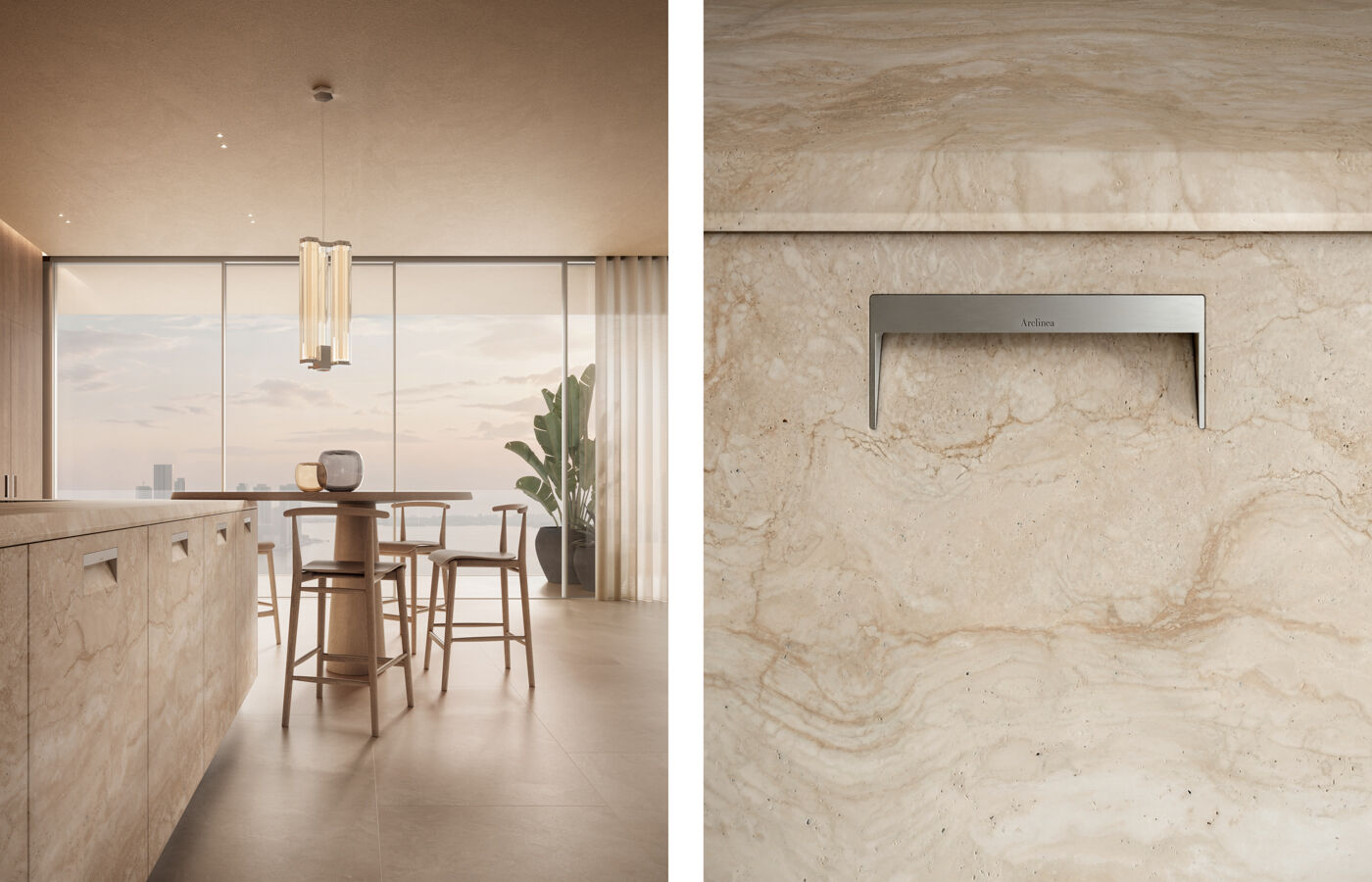

The curve as a design principle that redefines the kitchen experience.
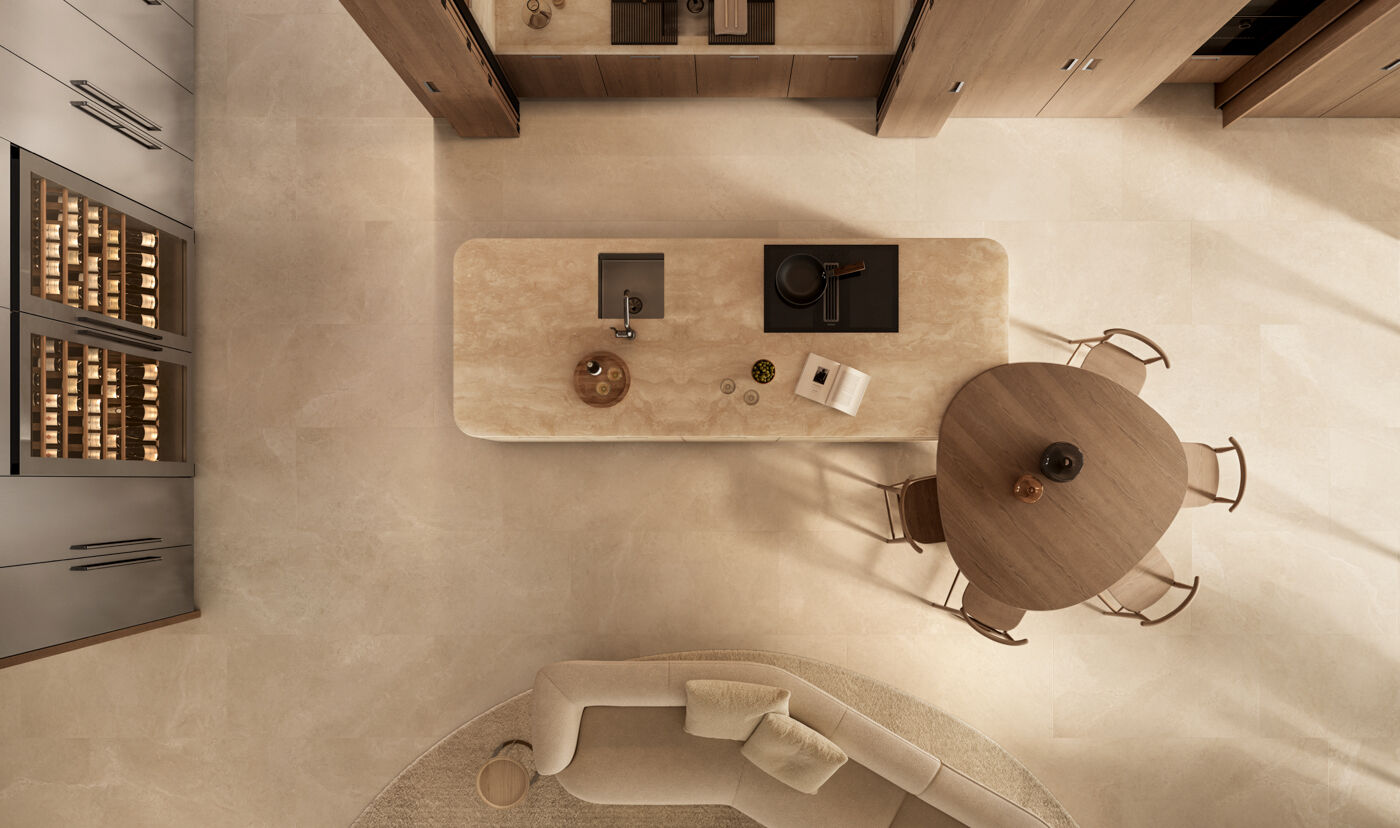

Behind the island, the fitted wall organises the space with clarity and purpose. Oven columns integrate with Modus doors which, when required, open the working area to reveal a monobloc marble worktop. Italia doors in NTF tobacco oak, paired with coordinated shelving and accessories, form a coherent system in which every function is precisely resolved.
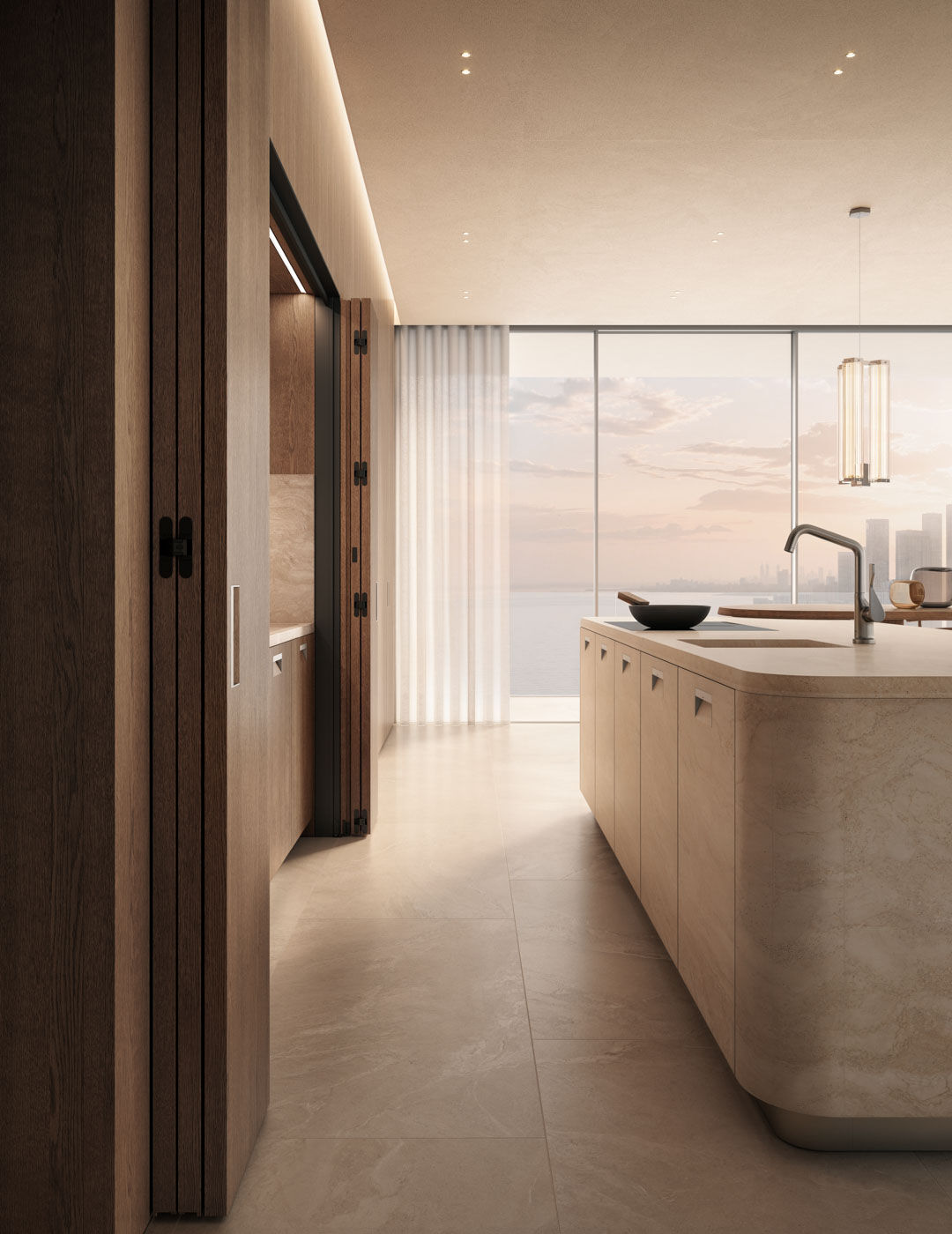

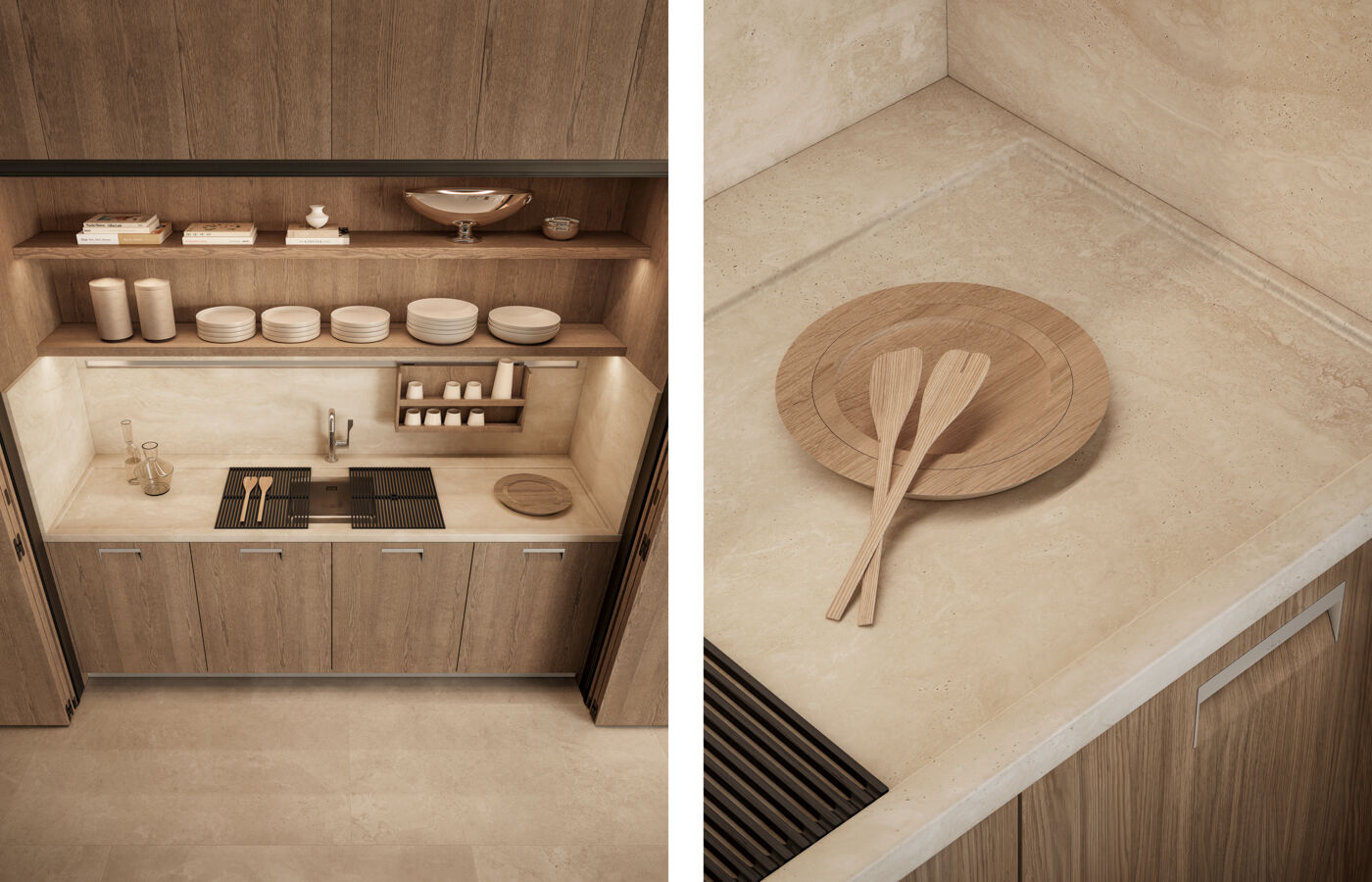

Matter and form merge into a continuity that becomes domestic architecture.
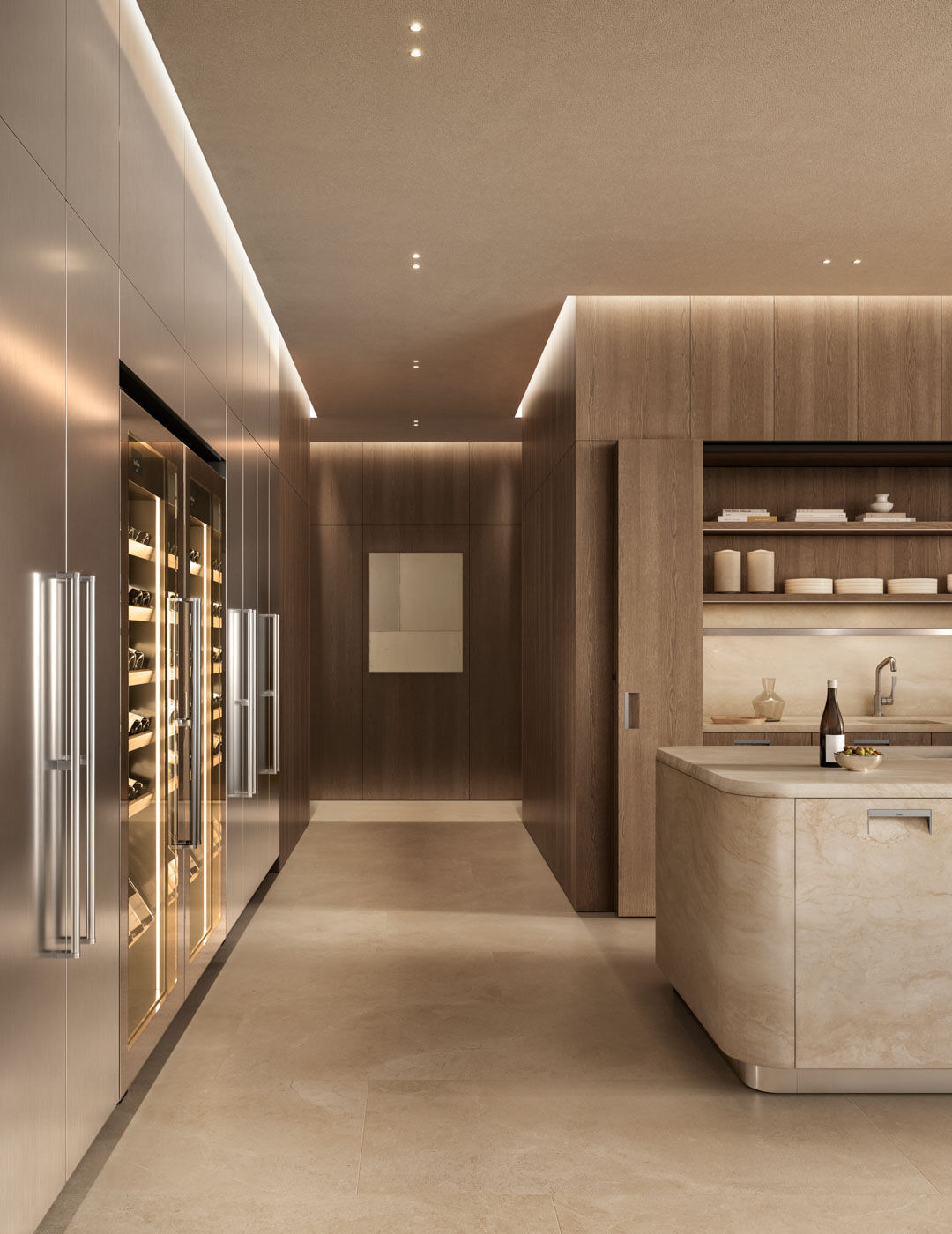

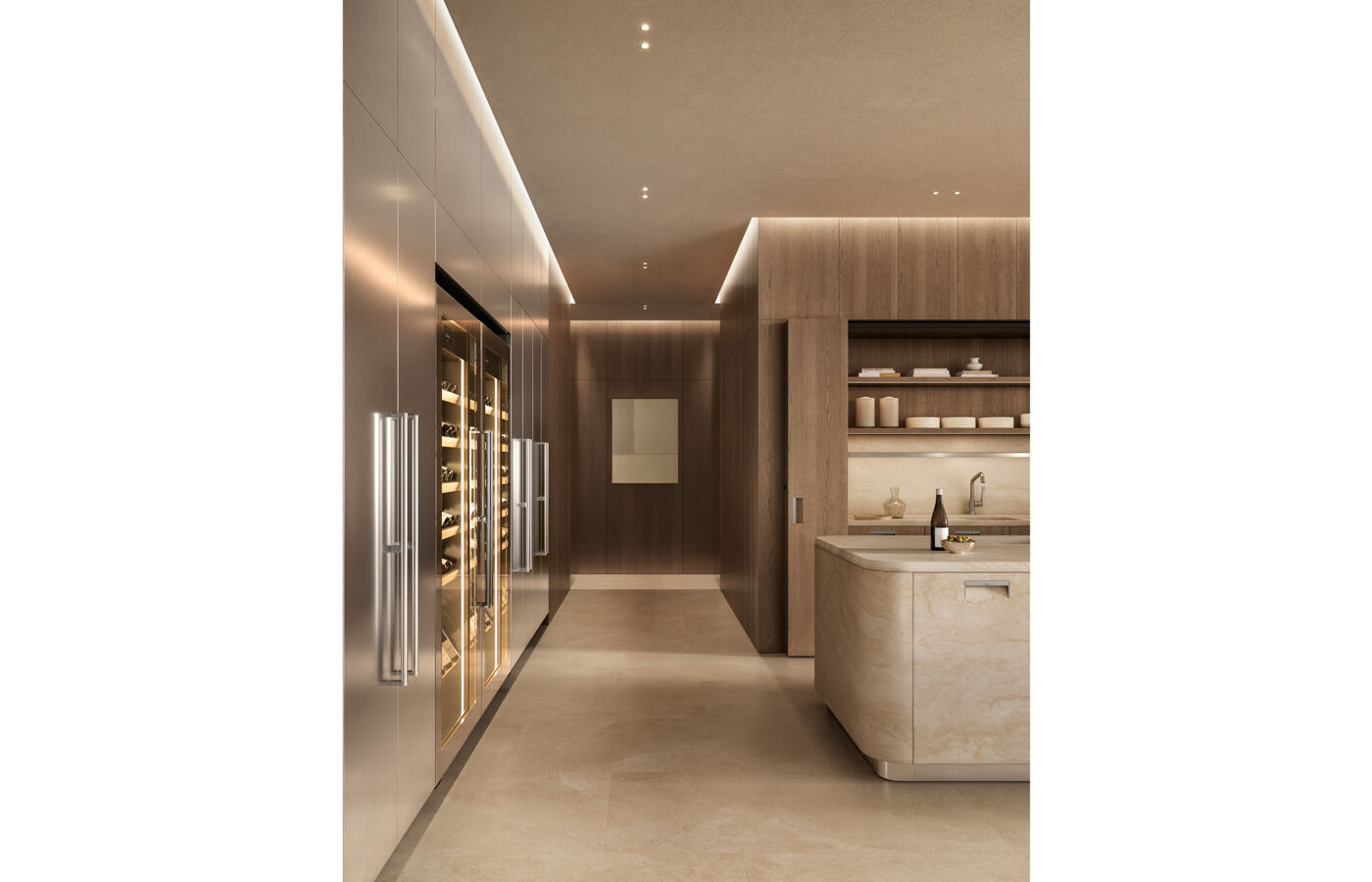

A striking, central element of the collection, Teca is integrated into the project as both a technological and architectural presence. Conceived for wine storage, it brings together advanced performance with a measured aesthetic. Externally, stainless steel defines its essential character, while the interior, arranged in a walnut finish, ensures optimal conditions for wines and food. Silent, connected and precise, Teca sits naturally within the kitchen, transforming storage into a convivial gesture and contributing to a refined, contemporary environment.
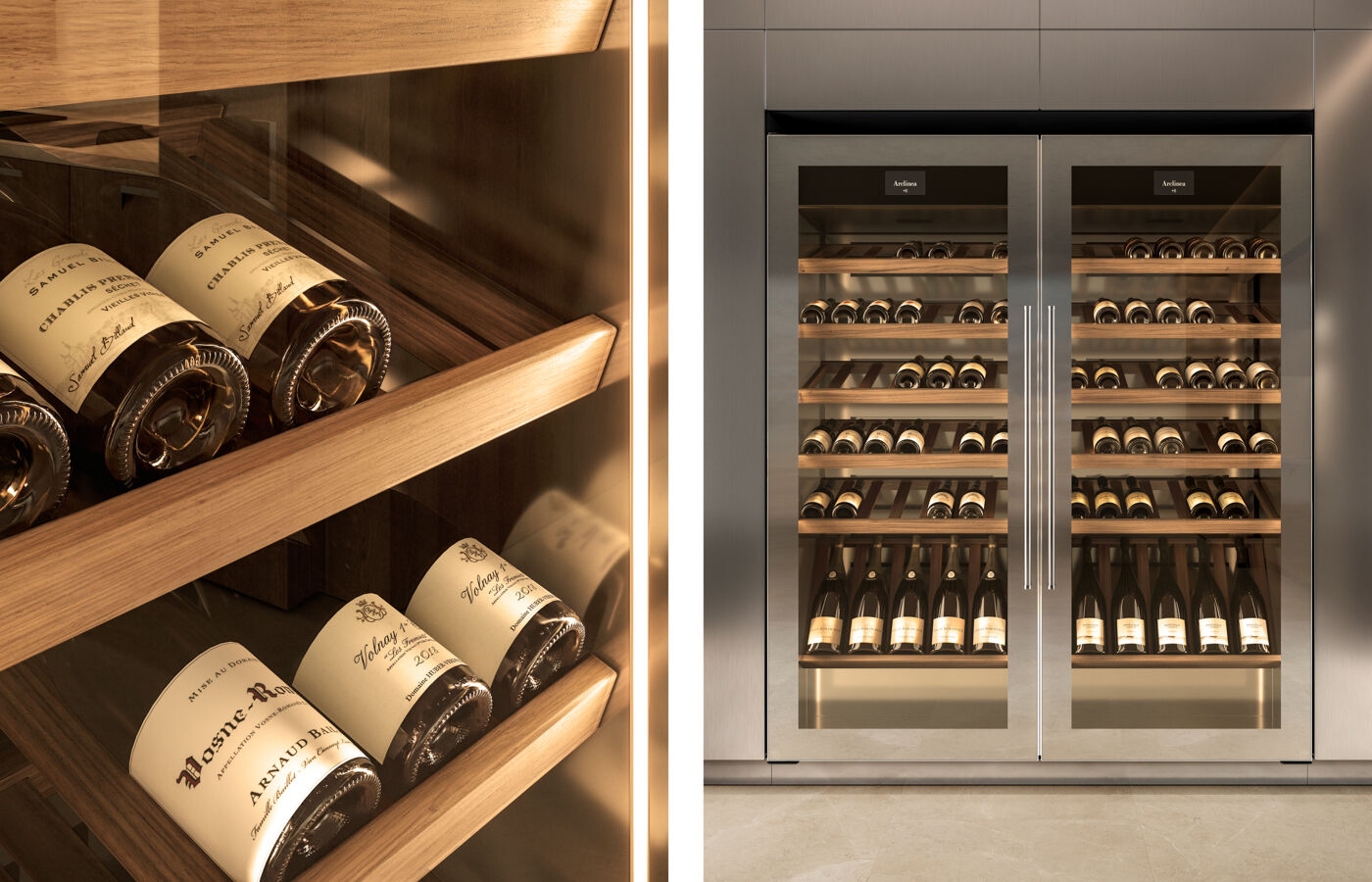

“The project stems from a reflection on space even before the object, as a place capable of generating possibilities.”

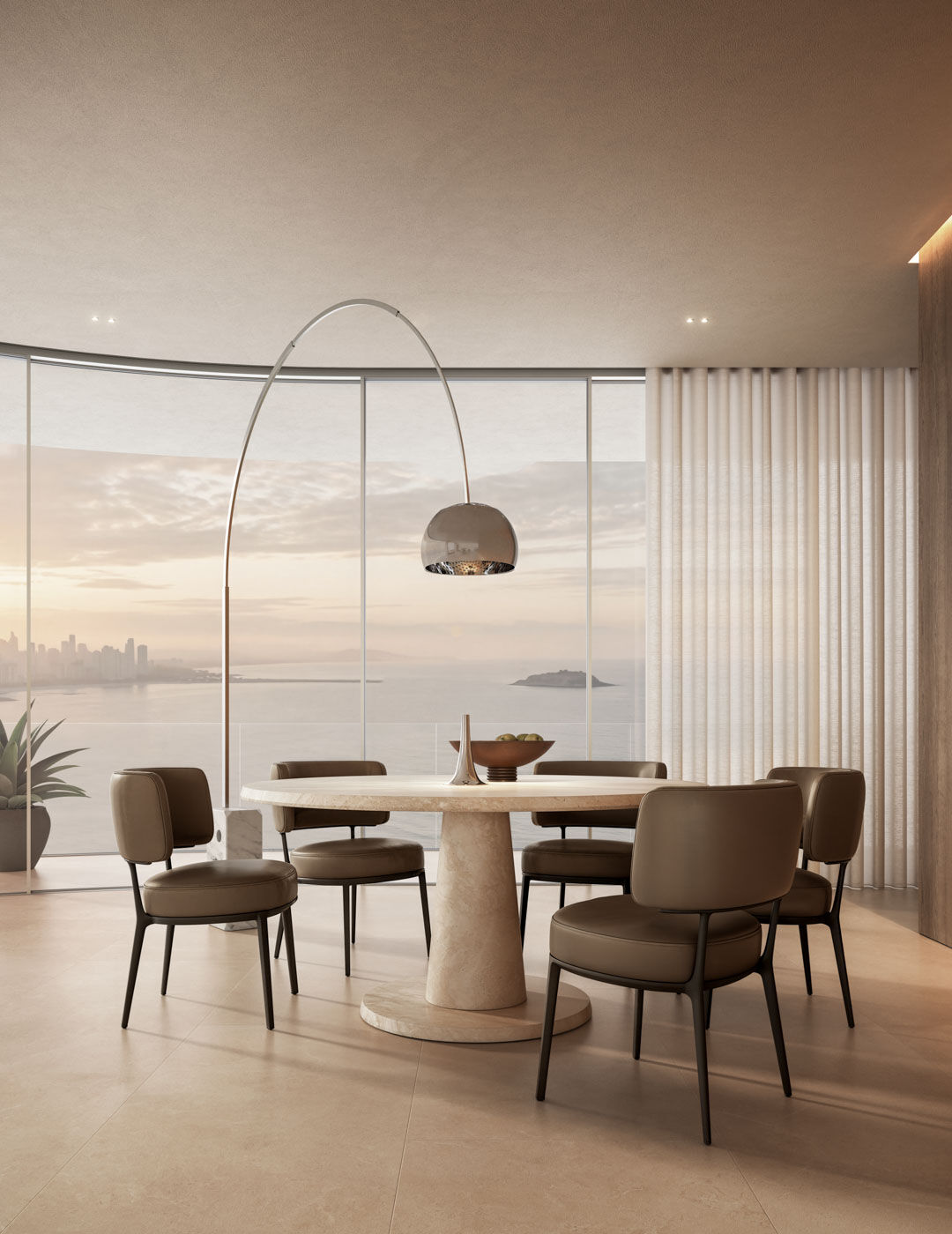
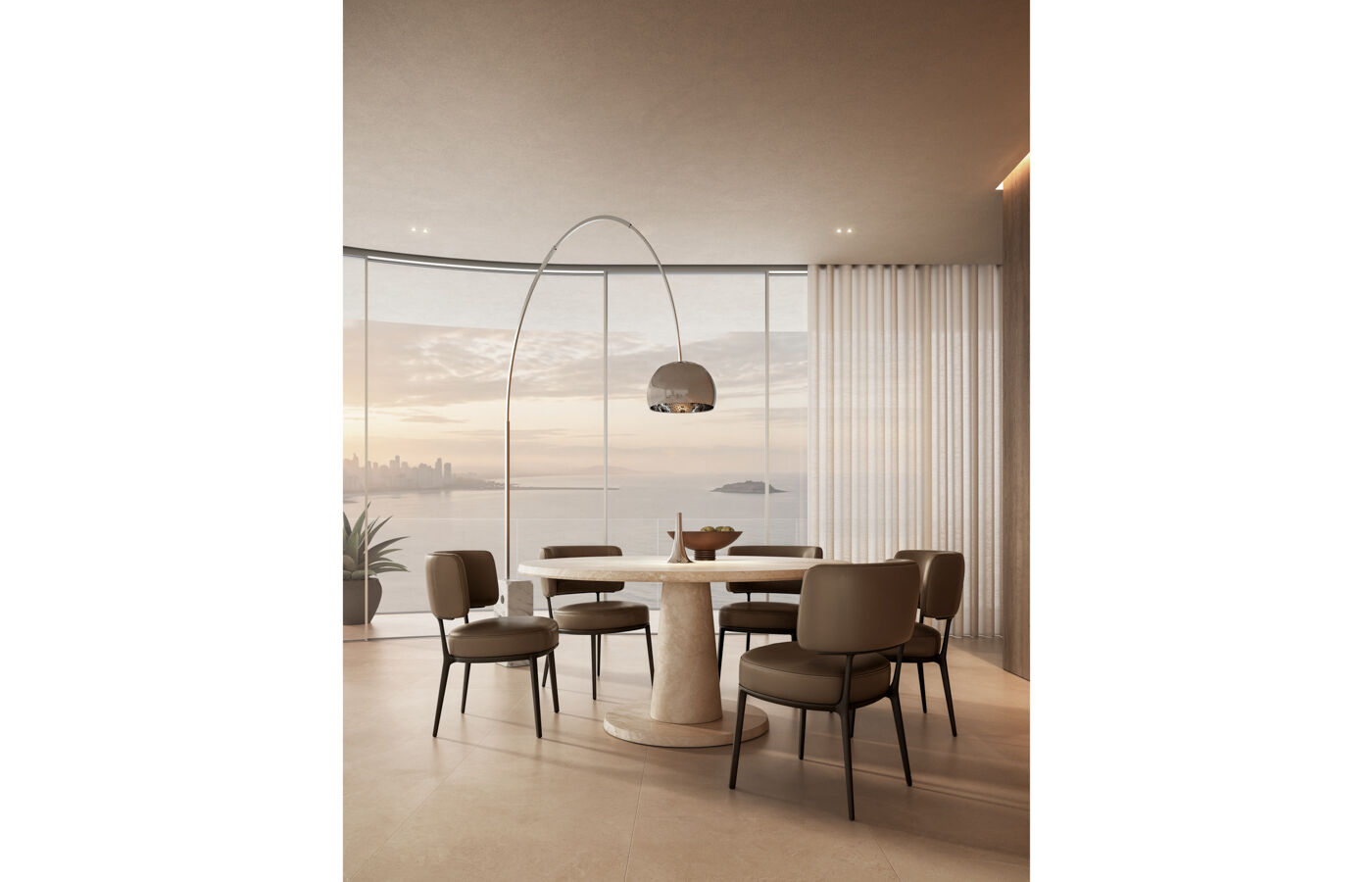
The space is completed by a seamless living and dining area, where the Vesper table, in its freestanding version, reprises the same material as the island, reinforcing a sense of stylistic and material coherence. A sofa with organic volumes and a grand piano set before the window define a fluid, harmonious setting, where sinuous forms are in quiet dialogue. Each element contributes to a balanced composition, where architecture, furnishings and function share a contemporary language.


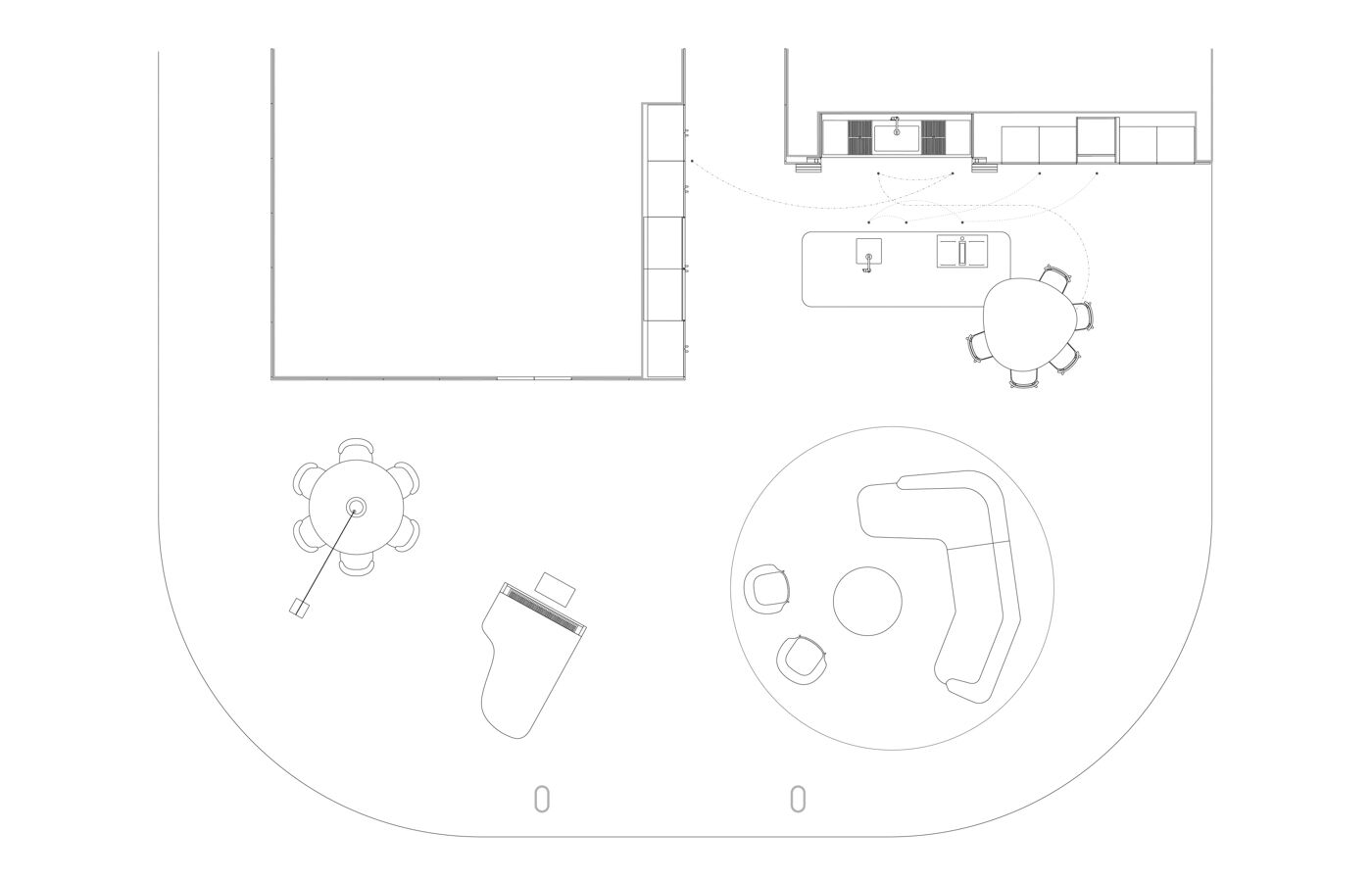

1. Fridge 2. Food Preparation 3. Sink 4. Cooktop 5. Oven 6. Waste bin 7. Dishwasher 8. Tall units
–.–.–. Washing cycle
……… Food Preparation cycle